
4,700+ sold · 100% feedback · US-based
Purpleheart is exactly what it sounds like, a wood that turns a genuine, vivid purple after it is cut and exposed to light. If you want purpleheart veneer sheets for a color no dye could match honestly, this is real wood veneer worth having on hand.
We cut and sell purpleheart veneer by the square foot in small, maker-friendly sizes.
What is purpleheart veneer?
Purpleheart veneer is a thin slice of real wood, from the Peltogyne family native to Central and South America. Slicing it thin stretches one dense, richly colored tree across many sheets, so a single log covers far more surface than the same wood sawn into solid boards. Because it is genuine wood veneer, not a printed laminate, it sands, stains, and finishes exactly like the solid board it came from.
Quick facts
Origin: Central and South America
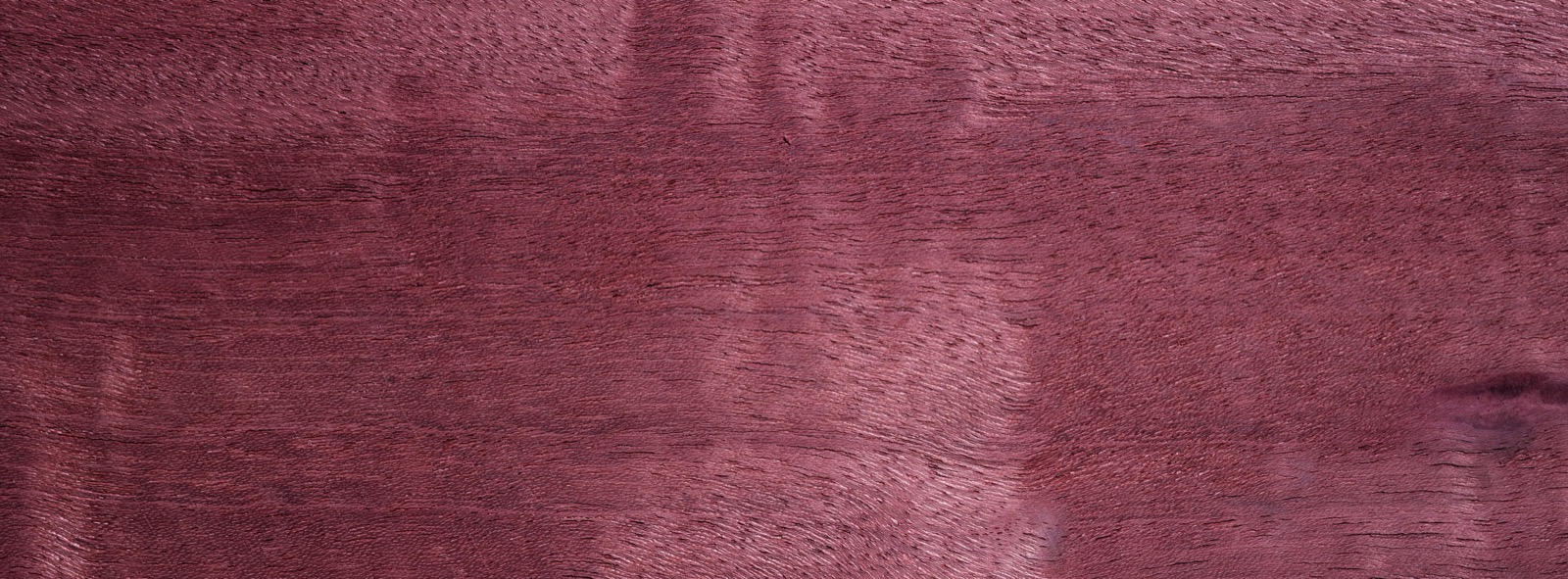
Color: Dull grayish brown when freshly cut, oxidizing to a vivid purple within days, settling into a deep purple brown over years
Grain / figure: Straight, occasionally wavy or interlocked
Cut: Plain sliced
Janka hardness: About 1,860 to 2,200 lbf
Thickness: We stock 1/45 inch raw and thicker options
Backing: Raw, or paper backed veneer on request
Workability: Good, though natural mineral content can dull blades faster than usual
Sold: By the square foot, ready to ship
Appearance and figure
Purpleheart's transformation is genuinely striking. A freshly cut sheet looks a fairly plain grayish brown, then oxidizes in the open air and under light into a vivid, unmistakable purple within days. Over years that intensity settles into a deeper purple brown, still clearly purple, just less saturated than the peak. Grain is mostly straight with occasional gentle waves.
[Buy purpleheart veneer on eBay →]
Working and finishing tips
Purpleheart cuts and presses like most dense exotics: a sharp razor knife, standard wood glue or contact cement, and a light touch through any wavy sections. One quirk worth knowing, its natural mineral content can dull standard blades faster than typical hardwoods, so carbide tools and a slower feed rate help.
A clear finish preserves the color best, and a UV inhibiting topcoat slows the eventual mellowing toward purple brown.
Honest cautions.
- The color takes time to develop. A fresh cut sheet looks grayish brown, not purple. Give it a few days of light exposure before judging the final color.
- Dulls blades faster than average. Natural silica content in the wood wears down standard blades, carbide tools last longer.
- Color mellows with age. The peak vivid purple settles into a deeper purple brown over years. A UV topcoat slows this.
Best uses
- Bold accent inlay and stripes. Its color makes a strong graphic statement against pale woods.
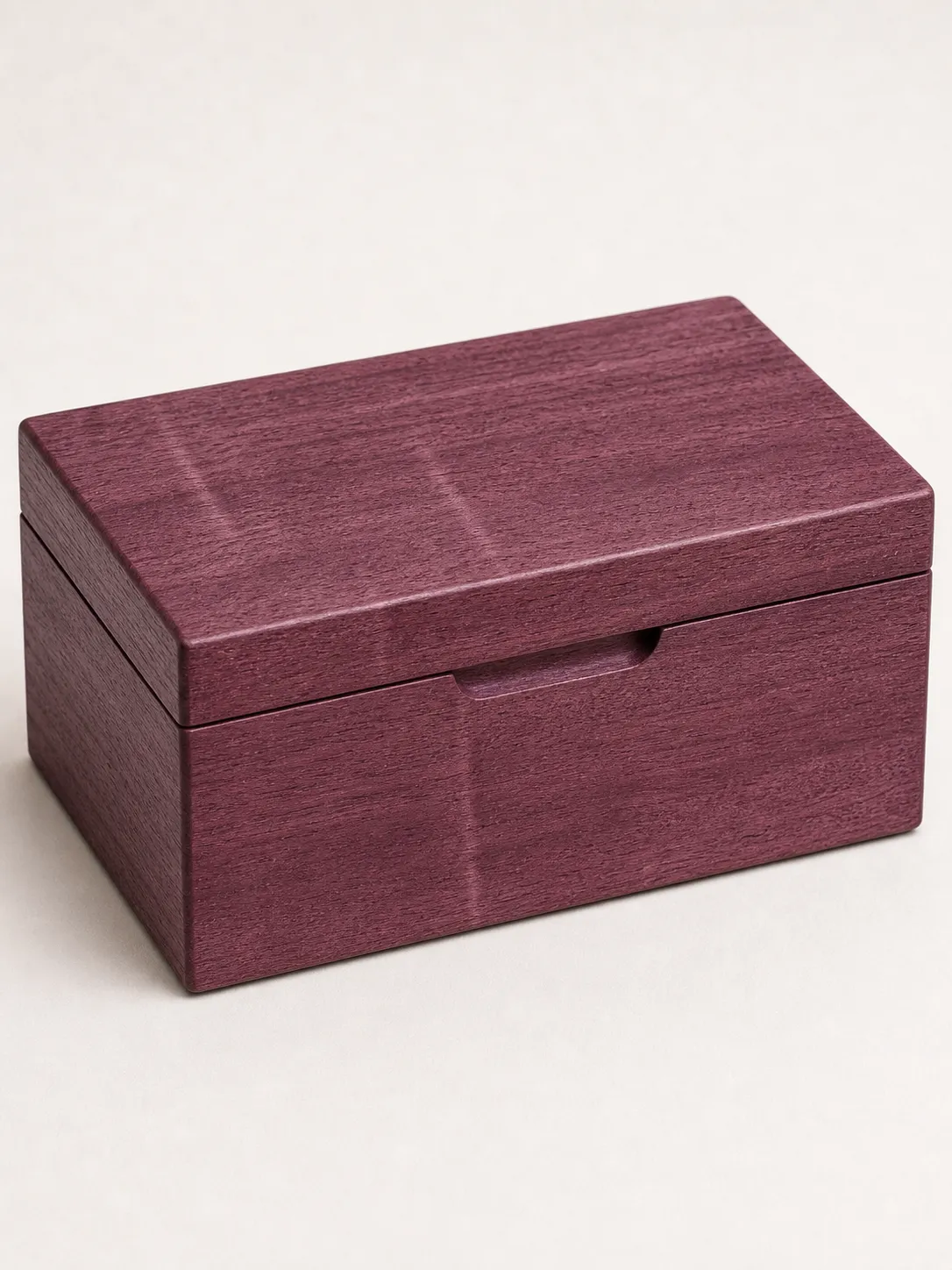
- Statement panels and box lids. A centerpiece species where color carries the design.
- Marquetry. Pairs dramatically with maple or holly for contrast. See Veneer for Boxes & Marquetry.
For another vivid color changing exotic, compare our Padauk. Browse the full Wood Veneer Types pillar or head to the Shop.
Sustainability and sourcing
Purpleheart is not currently CITES listed. As with all our tropical species, we favor established suppliers who source responsibly. Veneer stretches a dense, richly colored tree across far more finished surface than the same log cut into solid lumber.
Available now on eBay
Every sheet below is a live WoodCycle listing. We are US-based and ship fast, usually within one business day.
Frequently asked
Why does my purpleheart look brown instead of purple?
Fresh cut purpleheart starts a dull grayish brown and oxidizes into vivid purple within days of light and air exposure. Give it time before judging the color.
Will the purple color last?
It mellows from a peak vivid purple into a deeper purple brown over years, but it stays clearly purple rather than fading to plain brown.
Why does purpleheart dull my blades so fast?
It has natural mineral content that wears down standard blades faster than typical hardwoods. Carbide tools hold up better.
What pairs well with purpleheart?
Pale woods like maple or holly make the strongest contrast against its vivid purple tone.
Where does your purpleheart come from?
Central and South American purpleheart, sourced through established veneer suppliers. It is not CITES listed.
Need another species for the project?
Browse the full species library or shop live listings on eBay.