
4,700+ sold · 100% feedback · US-based
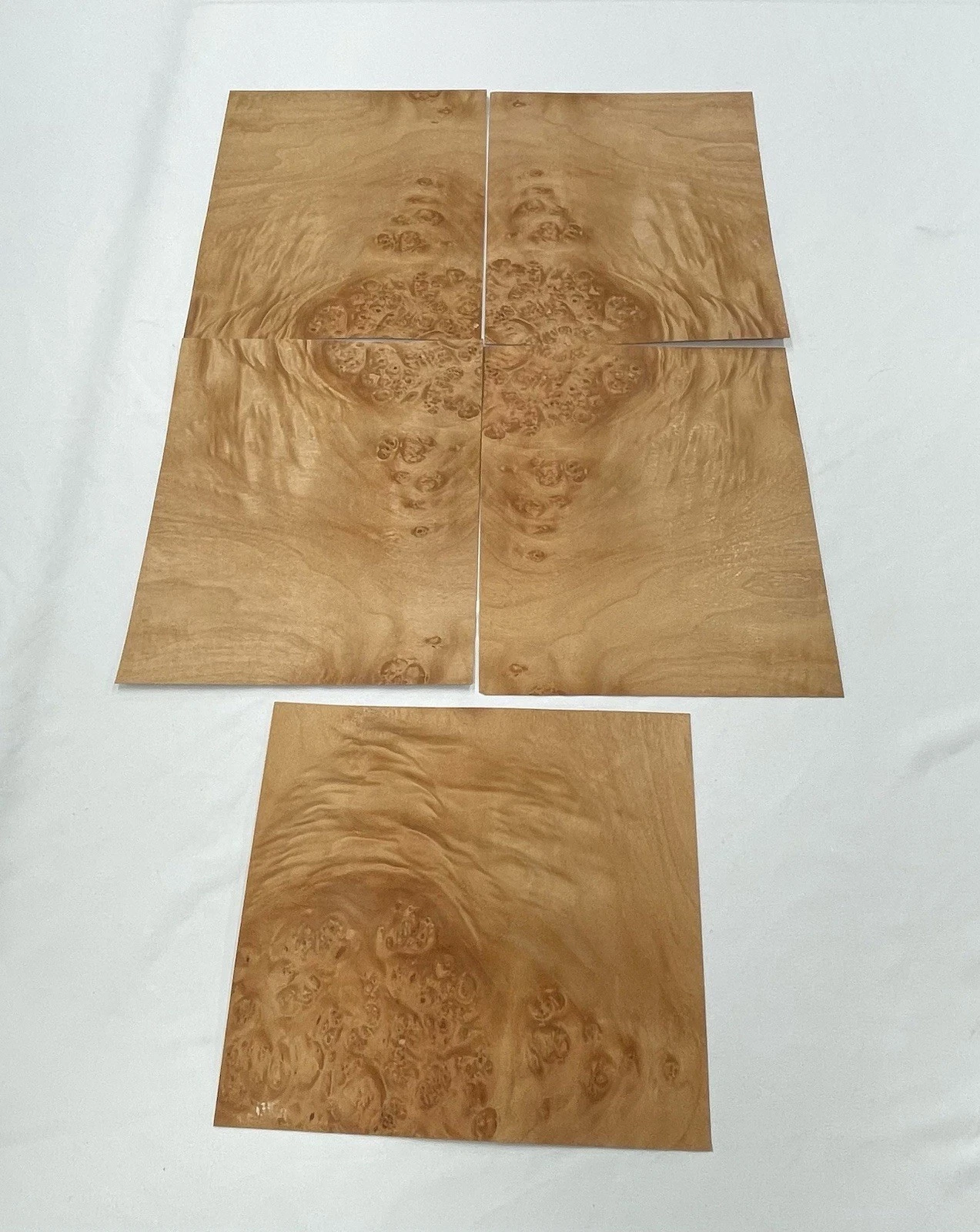
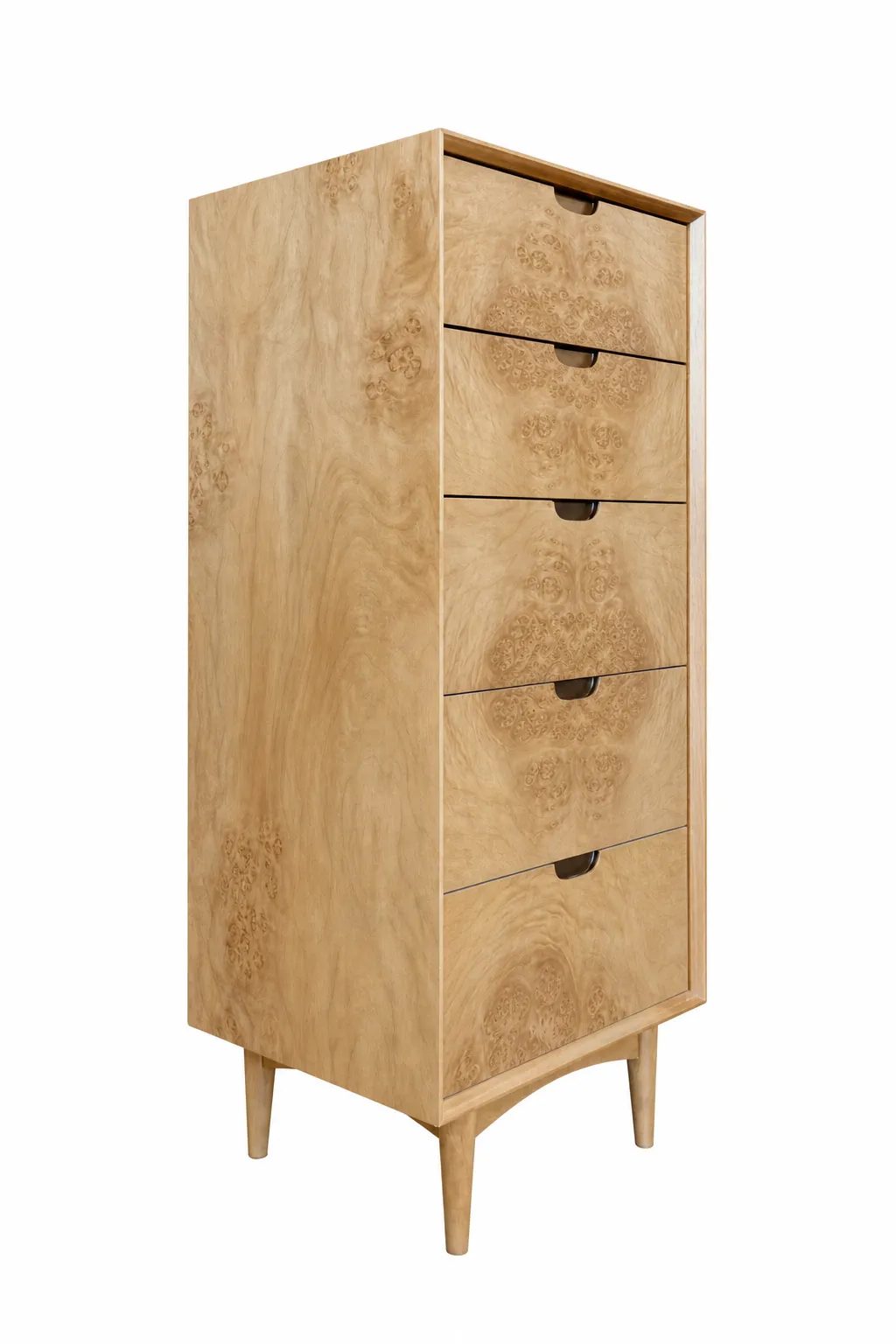
If you have ever admired the swirling, eye-filled dashboard of a vintage luxury car, you have already seen why elm burl veneer sells. Red Elm Burl Veneer brings that same dense, three-dimensional figure to your bench in small, maker-friendly sheets. It is a pale, honey-blond wood veneer packed with tight clusters of tiny eyes, the kind of surface that stops people mid-scroll.
What is red elm burl veneer?
Red elm (Ulmus rubra, also called slippery elm) is a North American hardwood. A burl is a knotty growth on the trunk or root where thousands of dormant buds cluster together instead of pushing out into branches. When that growth is sliced thin, those buds show up as a swirling field of little eyes and puckers, the classic elm burl figure.
The look has a famous name: Carpathian elm burl. That name comes from the European elms that grow east toward the Carpathian Mountains, and for a century it has been the go-to veneer for high-end dashboards, yacht interiors, and executive desks. Red elm burl gives you the same eye-catching figure from an American species, in the pale, honey-blond color range makers love.
Almost all elm burl is distributed as veneer, not lumber. The burl is too small, too wild, and too valuable to waste as solid stock, thin slicing stretches one rare cap across many projects. That is exactly the WoodCycle idea: make the most of a rare piece of wood.
### Quick facts
- Species: Red elm (Ulmus rubra), North American
- Also known as: slippery elm, soft elm; figure sold as Carpathian burl / elm burl
- Color: pale honey-blond to light tan, with darker eye clusters
- Grain / figure: dense burl clusters, swirling eyes, puckered "eye" figure
- Janka hardness: red elm runs about 860 lbf, though burl is too wild for a meaningful number
- Typical thickness: roughly 0.6 mm raw veneer
- Workability: brittle, tape and flatten before you cut
- Sheet sizes we stock: small maker sheets, sold per sheet with the square feet listed
Quick facts
Appearance and figure
If you have ever admired the swirling, eye-filled dashboard of a vintage luxury car, you have already seen why elm burl veneer sells. Red Elm Burl Veneer brings that same dense, three-dimensional figure to your bench in small, maker-friendly sheets. It is a pale, honey-blond wood veneer packed with tight clusters of tiny eyes, the kind of surface that stops people mid-scroll.
Working and finishing tips
Best uses
Sustainability and sourcing
Elm burl is genuinely scarce. Dutch elm disease has wiped out huge numbers of mature elms across Europe and North America since the mid-20th century, which tightened the supply of good burl caps and pushed prices up. That makes it a wood worth using carefully. Slicing a rare burl into thin veneer is the least wasteful way to enjoy it, one cap covers far more work as a veneer sheet than it ever could as a chunk of lumber. WoodCycle stocks these in small formats so you buy what your project needs and nothing sits as offcut.
Available now on eBay
Every sheet below is a live WoodCycle listing. We are US-based and ship fast, usually within one business day.
Frequently asked
Is red elm burl the same as Carpathian elm burl?
They share the same swirling, clustered-eye figure, so on a finished piece they look nearly identical. The difference is the tree: Carpathian burl comes from European elm, while this is red elm (*Ulmus rubra*), the North American species. Both are sold simply as elm burl veneer.
Why is elm burl veneer so brittle?
Burl grain swirls in every direction with no single line to follow, so it splits easily, most of all around the eyes. Tape the face before cutting, flatten it with veneer softener, and glue it to a backer, and it becomes very manageable.
Can I use red elm burl for pens and knife scales?
Yes. Its dense figure and small format make it ideal for pens, knife scales, and other small blanks. Bond it to a backer or stabilize it first so it holds up to turning and shaping.
Do the natural holes and voids mean the veneer is defective?
No. Bark inclusions and small voids are normal in real burl and part of its character. Fill them with tinted epoxy or CA glue and dust before finishing, or leave a few for a rustic look.
How do you sell it, by the sheet or the square foot?
By the sheet, with each listing showing the exact dimensions and square feet so you know precisely what you are getting. Check the live eBay feed above for current stock.
Need another species for the project?
Browse the full species library or shop live listings on eBay.