
4,700+ sold · 100% feedback · US-based
How to choose veneer for small work
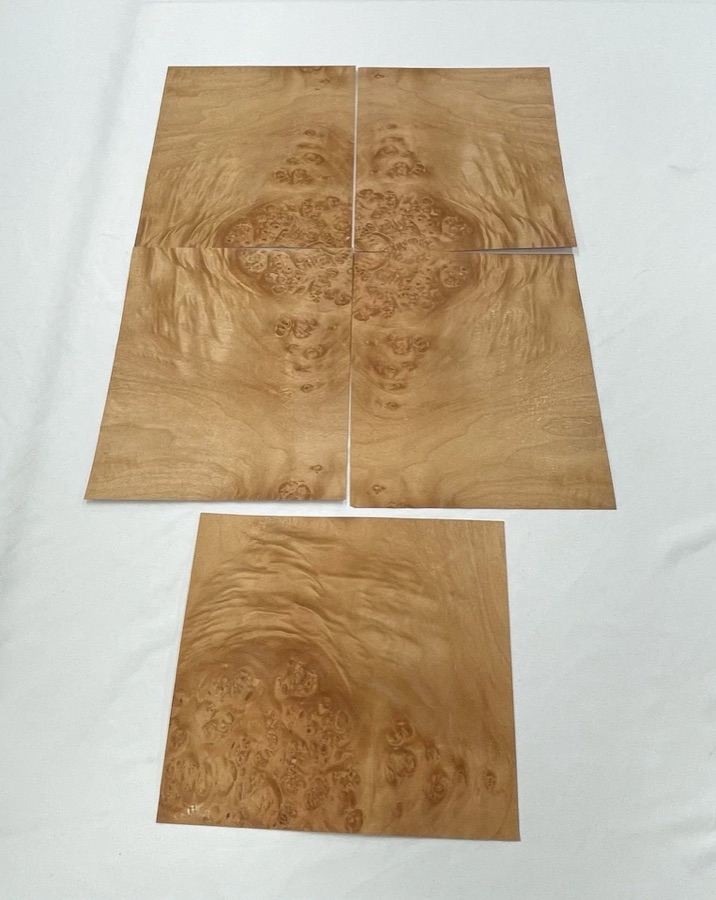
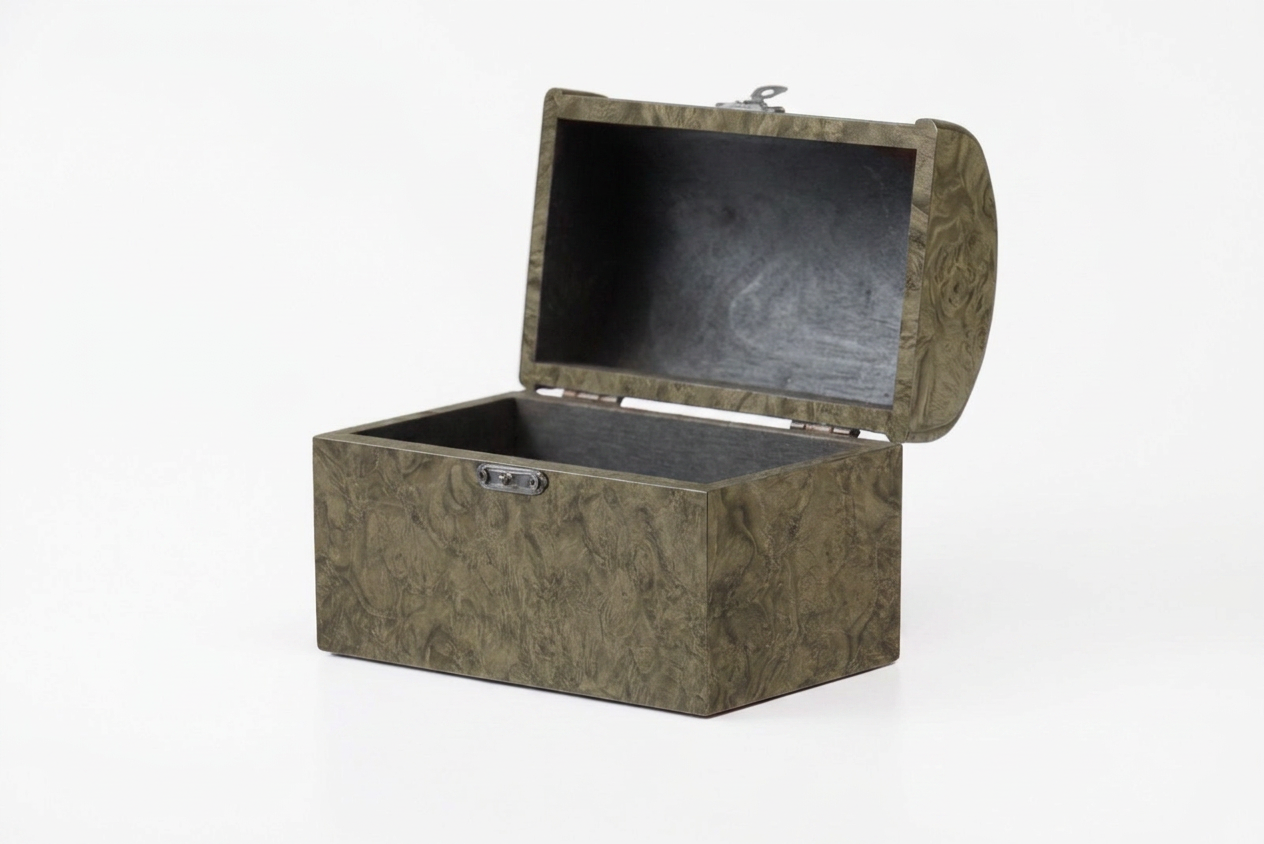
For boxes and marquetry, buy for scale. Wide cathedral grain that looks great on a table can feel oversized on a jewelry box lid. Burl, birdseye, curly maple, pommele, and tight stripe patterns give you more visual reward in a smaller footprint.
Raw veneer is usually the best choice for fine layout work because it cuts cleanly, book-matches well, and lets you tape seams before pressing. Paper-backed veneer can still work for simple box panels or larger trays when you want extra handling strength.
Best species for boxes and marquetry
Walnut burl and red elm burl bring dense figure for lids and show panels. Birdseye maple gives a bright, traditional look for keepsake boxes. Macassar ebony, wenge, and ziricote add dark contrast for borders, bands, and graphic inlay. Figured maple and pommele sapele work well when you want shimmer instead of hard contrast.
Cutting and layout tips
Make a paper template before cutting the veneer. Keep grain direction consistent across paired parts, and tape the show face before trimming fragile burl edges. Cut in light passes with a fresh blade, support every offcut, and press the veneer between flat cauls so a small panel stays crisp.
Available now on eBay
Every sheet ships from the USA. We post real photos, so the figure you see is the figure you get.
Frequently asked
What veneer is best for marquetry?
Raw veneer is usually best because it cuts cleanly, tapes well, and lets you build patterns before pressing.
Can I use burl veneer on a box lid?
Yes. Burl is one of the best choices for a lid or show panel, but cut it gently and back up fragile edges.
Do I need a vacuum press for box veneer?
No. A flat caul and even clamps can work well on small parts as long as pressure is even across the panel.
Need a matched size or quantity?
Ask about wholesale and custom cuts, or grab live sheets from the eBay store.