
4,700+ sold · 100% feedback · US-based
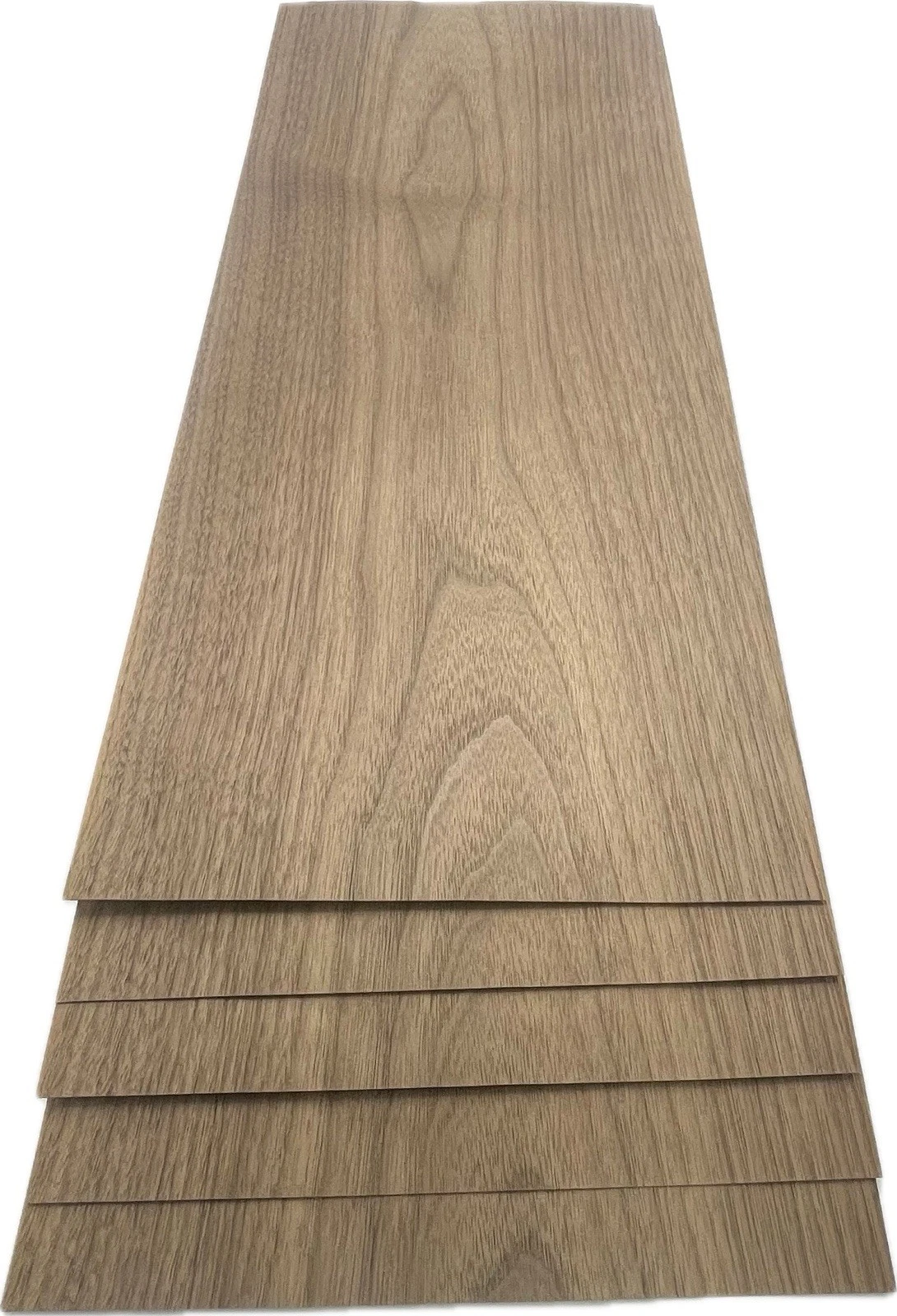
Walnut is the wood most makers reach for first, and it earns the spot. Its warm chocolate brown color, straight-to-wavy grain patterns, and easy workability make American black walnut a joy to cut, press, and finish. If you want walnut veneer sheets that look rich and behave well on the bench, you are in the right place.
We cut and stock walnut in small, maker-friendly sizes and sell it by the square foot, so you can buy walnut veneer without ordering a full architectural pallet. Whether you are building a jewelry box, a guitar top, or a set of knife scales, this is the walnut wood you want.
What is walnut veneer?
Walnut veneer is a thin slice of real wood, American black walnut (Juglans nigra), a native hardwood of the eastern and central United States. We slice it thin so one board becomes many sheets, which stretches a beautiful, slow-growing tree much further than solid lumber ever could. That is the whole WoodCycle idea: make the most of premium walnut with less waste.
Because it is real wood veneer sheets and not a printed laminate, it sands, stains, and finishes exactly like the solid board it came from.
Quick facts
Origin: Eastern and central United States (North America)
Color: Chocolate brown heartwood, sometimes with purplish streaks; pale, creamy sapwood
Grain / figure: Straight to gently wavy; crotch, burl, and figured cuts available
Cut: Plain sliced (flat cut), the classic cathedral grain pattern
Janka hardness: ~1,010 lbf
Thickness: We stock 1/45" (about 0.6 mm) raw and thicker options
Backing: Raw, or paper backed veneer on request
Workability: Excellent, easy to work, cut, and finish
Sold: By the square foot, ready to ship
Appearance and figure
Walnut is prized for its color. Freshly cut heartwood runs from milk chocolate to a deep, almost purplish brown, often with darker streaks and the occasional lighter sapwood edge. Over time and under light it mellows to a warm, even golden brown, a shift woodworkers plan around and love.
Most of what we stock is plain sliced, which gives you the sweeping cathedral grain patterns that make walnut instantly recognizable. Because it is plain sliced from the log, sequential sheets book-match cleanly for symmetrical panels. Look closer and you will find gentle waves, the odd swirl near a branch, and pin-straight runs perfect for clean modern work. For wilder character, tight curl or dense burl clusters, see our Figured Walnut and Walnut Burl pages.
[Buy walnut veneer on eBay →]
Working and finishing tips
Walnut is one of the friendliest species you can put on a bench. It is easy to work with a sharp razor knife or a fine-tooth blade, presses flat without much fuss, and takes glue well. For most jobs, a quality PVA (wood glue) and a veneer press or cauls is all you need; for curved forms and quick repairs, contact cement is the standard choice. Contact cement grabs on contact, so dry-fit carefully before you commit.
Sand up to about 220 grit, no higher, or you can burnish the surface and fight your finish. Walnut looks its best under a clear oil or a wipe-on poly, both of which deepen the chocolate brown and light up any figure. A coat of shellac as a sealer keeps blotching down before you top-coat.
Honest cautions. Walnut is generous, but a few things trip people up:
- Sapwood contrast. The pale sapwood stands out sharply against dark heartwood. That can be a feature or a flaw, plan your layout, or steam/dye the sapwood if you want it to blend.
- Color fade. Unlike many woods, walnut lightens with sun exposure. A UV-inhibiting topcoat slows it, but expect some mellowing over the years.
- Cross grains at figure. Around crotch and curl, the grain reverses direction. These cross grains can chip if you cut against them, so score first and slice with light passes.
- Glue bleed. Because it is porous, thin glue can seep through to the show face. Use the right amount and keep a damp rag handy.
None of these are deal-breakers, walnut stays one of the easiest hardwoods to veneer with once you know them.
Best uses
Walnut suits almost any project, which is why it is a bench staple across every wood species we carry:
- Boxes, trays, and marquetry, its color and clean grain make it a marquetry mainstay. See Veneer for Boxes & Marquetry.
- Guitars and instruments, a warm, resonant look for tops, back-and-sides accents, and headstock overlays. See Veneer for Guitars & Luthiers.
- Pens and knife scales, small offcuts go a long way; stabilized walnut turns and polishes beautifully. See Veneer for Pens & Knife Scales.
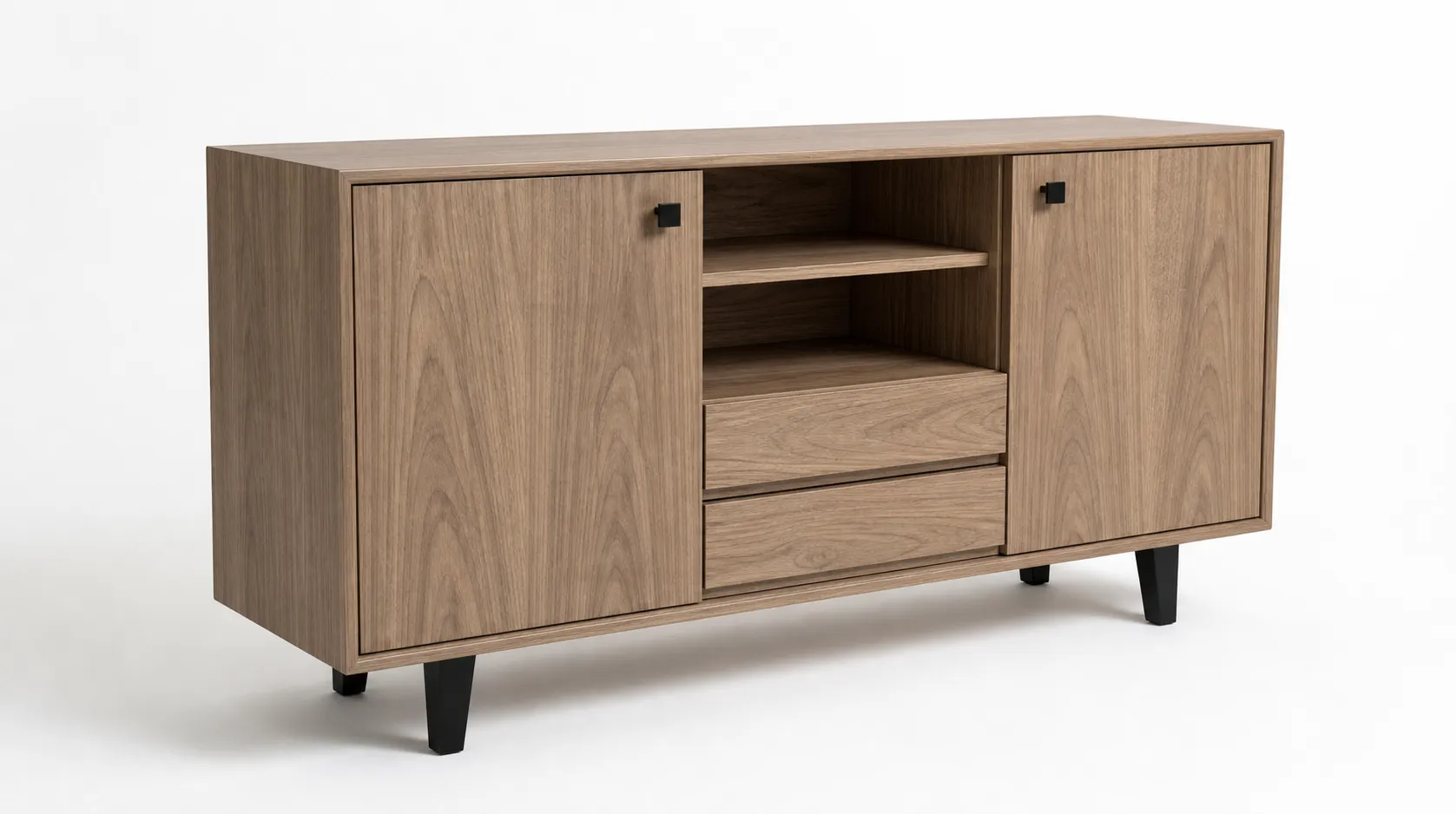
- Cabinetry and furniture, the classic use, from mid-century sideboards to modern built-ins.
For a warmer, redder alternative with ribbon figure, compare our Sapele. To see how walnut sits among the rest of the catalog, browse the Wood Veneer Types pillar or head straight to the Shop.
Sustainability and sourcing
American black walnut is a stable, well-managed North American hardwood. It carries no CITES listing and is rated Least Concern by the IUCN, so there are no international trade restrictions on it. Slicing it into veneer is the sustainable move: a single log yields hundreds of square feet of face, so you get premium walnut for your project while the tree goes much further. That is the point of WoodCycle, beautiful wood, far less waste.
Available now on eBay
Every sheet below is a live WoodCycle listing. We are US-based and ship fast, usually within one business day.
Frequently asked
Is walnut veneer easy to work with?
Yes. American black walnut is one of the easiest species to cut, press, and finish. A sharp knife, standard wood glue or contact cement, and light sanding are all most projects need.
What color is walnut veneer?
A rich chocolate brown heartwood, sometimes with purplish streaks, next to pale creamy sapwood. It lightens toward a warm golden brown over time.
How is your walnut veneer cut and sold?
It is plain sliced (flat cut) from the log for classic cathedral grain patterns, and sold by the square foot in small maker-friendly sheets. Raw or paper backed veneer options are available.
What glue should I use?
PVA wood glue with a press for flat panels; contact cement for curves and quick work. Both bond walnut well, just dry-fit before contact cement grabs.
Where does your walnut come from?
It is American black walnut grown in the United States. The species is not CITES-listed and is rated Least Concern, so it is a responsible, sustainable choice.
Need another species for the project?
Browse the full species library or shop live listings on eBay.