4,700+ sold · 100% feedback · US-based
Walnut burl wood veneer is one of the most dramatic surfaces a maker can put on a project. Tight clusters of swirling eyes, warm chocolate color, and a deep three-dimensional glow make it a showpiece on jewelry boxes, pen blanks, dashboards, and fine furniture. It is figure at its wildest. We cut small, ready-to-ship sheets sized for makers, not architects.
This page is straight talk about what walnut burl veneer is, why it looks the way it does, and how to work it without cracking it. Burl is beautiful and it is fragile, so we tell you both.
What is walnut burl veneer?
A burl is a knotty, rounded growth on a walnut tree. It forms when the tree responds to stress, injury, or a bacterial infection, and its growth cells go into overdrive. Instead of running straight, the fibers fold, roll, and compress on themselves. That chaos is exactly what makes burl wood so prized. Dormant buds that never sprouted show up as the small dark eyes packed across the surface.
Because no two burls grow the same way, every sheet is one of a kind. Walnut burl veneer gives you intricate grain patterns you simply cannot get from straight-grained lumber. It is the tree's scar tissue turned into art.
Quick facts
Color: Warm brown to chocolate, with darker streaks and swirling eyes
Grain / figure: Clustered burl eyes, highly three-dimensional
Janka hardness: Not rated as a figure; parent black walnut is about 1,010 lbf
Typical thickness: Raw veneer around 0.5 mm; backed sheets thicker
Workability: Brittle, flatten and back before cutting
Sheet sizes we stock: Small maker-friendly sheets and craft packs
Appearance and figure
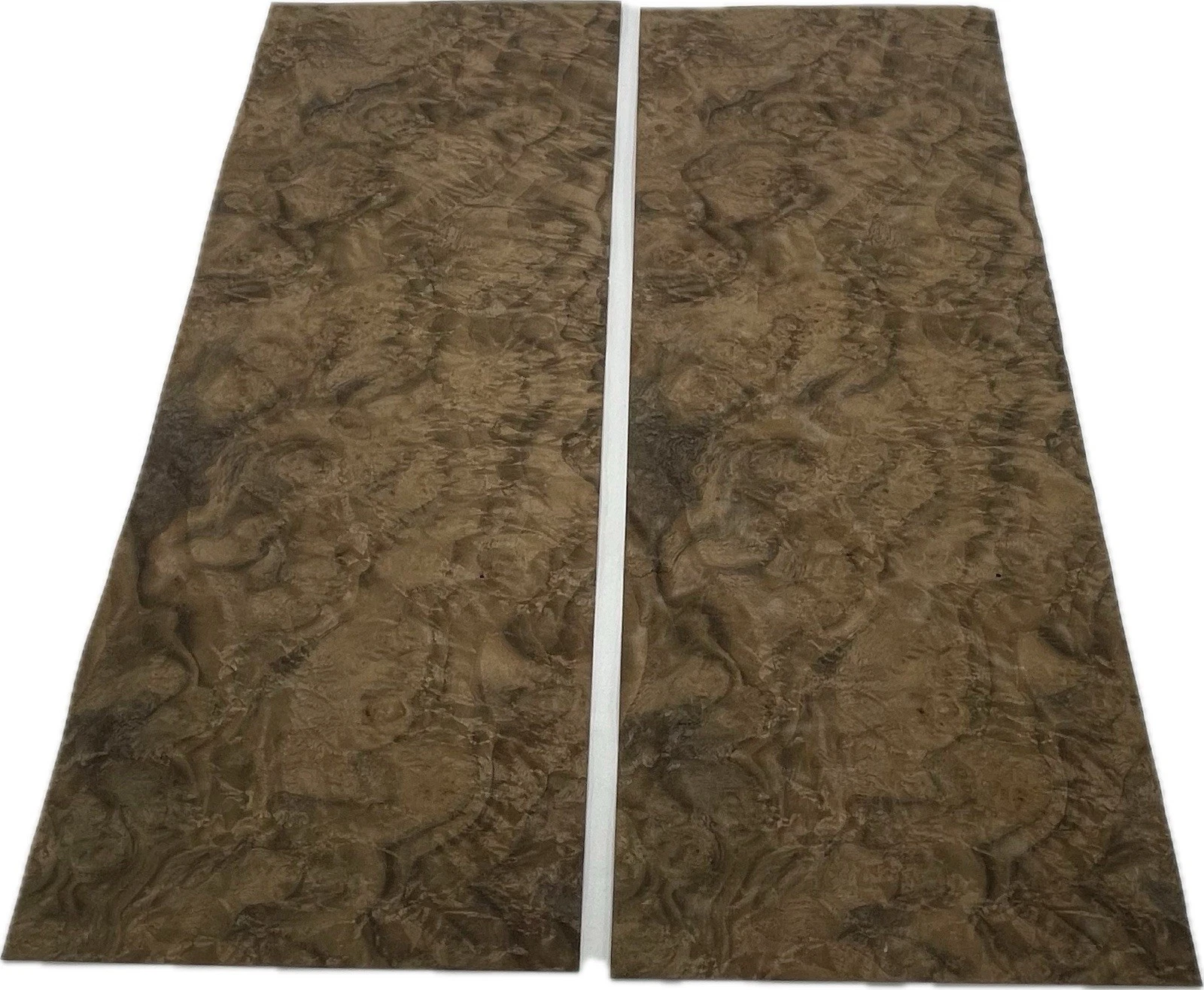
The color runs from warm honey-brown to deep chocolate, often with darker streaks and the occasional lighter patch of sapwood. Under a finish, walnut burl comes alive. The clustered eyes catch light from different angles and give the surface real depth, almost like looking into water.
Expect the figure to shift across a single sheet. Some areas pack tight with eyes; others open into swirling, feather-like flow. This variety is the whole point of burl veneer. If you want two panels to match, buy them together so the story reads across the seam.
Buy walnut burl veneer on eBay, every sheet photographed as it ships.
Working and finishing tips
Cut walnut burl veneer with a fresh razor knife or scissors, taking light passes and backing the cut with a straightedge. Blue painter's tape over a fault line keeps it from running. For adhesive, PVA (wood glue) in a press works well, and contact cement is fine for backed veneer sheets on flat panels.
Sand lightly with the grain where you can, with burl there often is no single grain direction, so go easy and finish at a fine grit. Walnut burl takes stain and clear finishes beautifully. A wipe of oil or a coat of shellac deepens the color and makes the eyes pop. Fill any voids before your final coats.
Best uses
Walnut burl shines where a small amount of figure carries the whole piece:
- Pens and knife scales, small blanks show off the eyes
- Boxes and marquetry, inlays, lids, and accent panels
- Dashboards and instrument faces
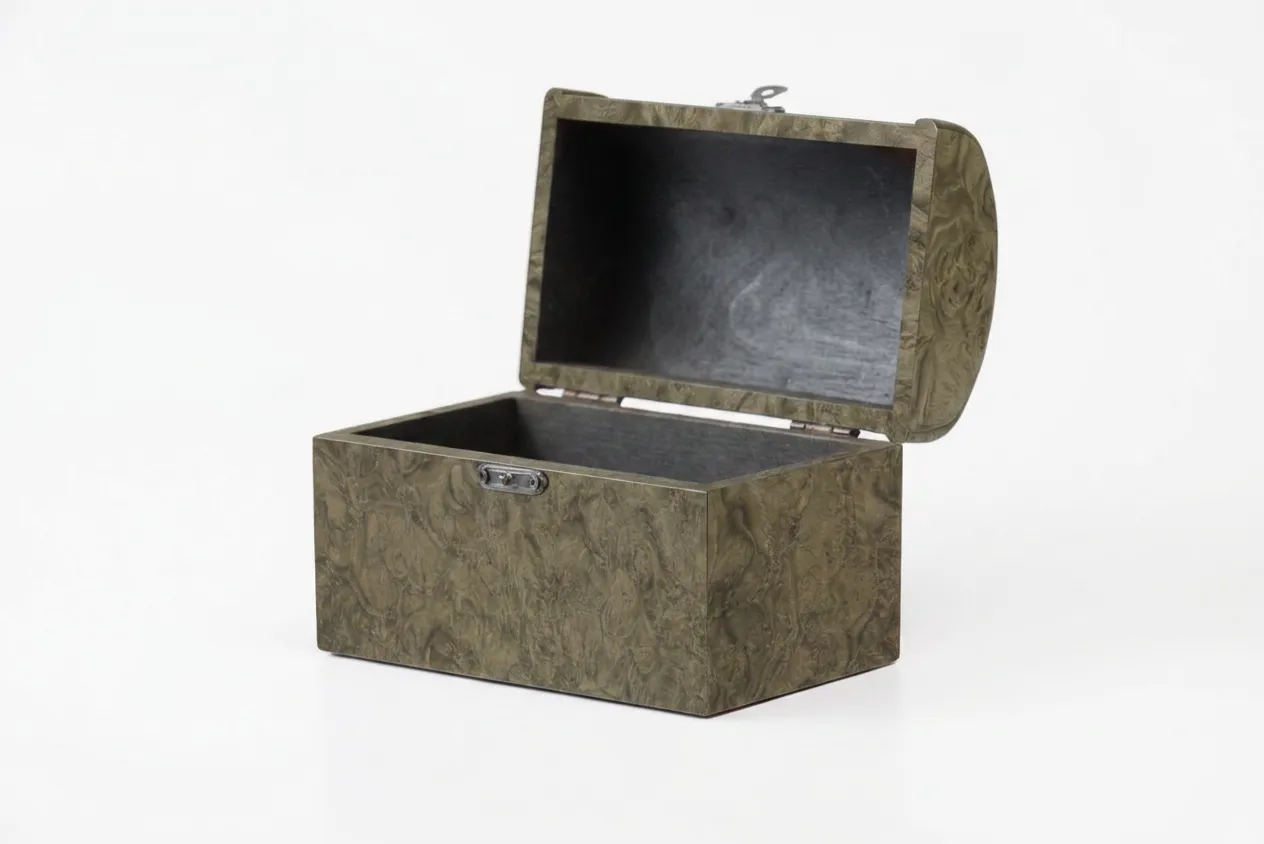
- Jewelry boxes, humidors, and small cabinet doors
- Walnut veneer, the straight-grained sibling
- Red Elm Burl, another dramatic burl
- Makore, figured, warm-toned alternative
- Wood Veneer Types · Shop all veneer
---
Sustainability and sourcing
Burl is rare, so thin veneer is the honest way to use it. One burl slabbed into veneer sheets covers many projects, while sawing it into solid blocks would waste most of it and warp badly besides. Getting the most beauty from the least wood is the whole idea behind WoodCycle. We reclaim and repurpose rare wood so more makers can work with it.
Buy walnut burl veneer on eBay, small sheets, fair prices, ready to ship.
Available now on eBay
Every sheet below is a live WoodCycle listing. We are US-based and ship fast, usually within one business day.
Frequently asked
Is walnut burl veneer hard to work with?
It is more delicate than straight-grained veneer because the grain swirls in every direction. Flatten it, back it, and cut with a sharp blade and it behaves well. Buying it pre-backed removes most of the risk.
Why does walnut burl have holes?
Natural burl grows with small voids and bark pockets. This is normal, even in top grades. Fill them with tinted epoxy or wood filler, or leave them showing for a rustic look.
Does walnut burl veneer need a backer?
For most projects, yes. A paper, wood, or phenolic backer stabilizes the fragile grain and stops it from checking over time. We recommend backing for anything larger than a pen blank.
Is walnut burl endangered or restricted?
No. It comes from American black and Claro walnut, both North American species with no CITES restrictions.
Need another species for the project?
Browse the full species library or shop live listings on eBay.