
4,700+ sold · 100% feedback · US-based
Makore wood veneer is one of West Africa's quiet stars. It is a pinkish brown to deep reddish-brown hardwood. Under a finish, it lights up with a soft, watery shimmer. Woodworkers reach for makore veneer sheets when they want the warmth of mahogany. But makore has a finer grain and more shine. If you build fine furniture, guitars, or small boxes, this is a veneer worth knowing.
What is makore veneer?
Makore veneer is a thin slice of real wood cut from Makore (Tieghemella heckelii), also sold as African Cherry. It is used to bring the look of the species across a much larger surface than solid stock would allow, and it keeps more of each log in play for real projects. This stock traces back to West and Central Africa.
Quick facts
Origin: West and Central Africa
Color: Pinkish brown to reddish-brown heartwood; pale yellow sapwood
Grain / figure: Fine, even texture; often interlocked, with quilted, mottle figured, or fiddleback variants
Janka hardness: ~1,200 lbf, a touch harder than white oak
Typical thickness: Raw veneer around 1/40" (0.6 mm)
Workability: Good with sharp tools; silica content dulls blades fast
Appearance and figure
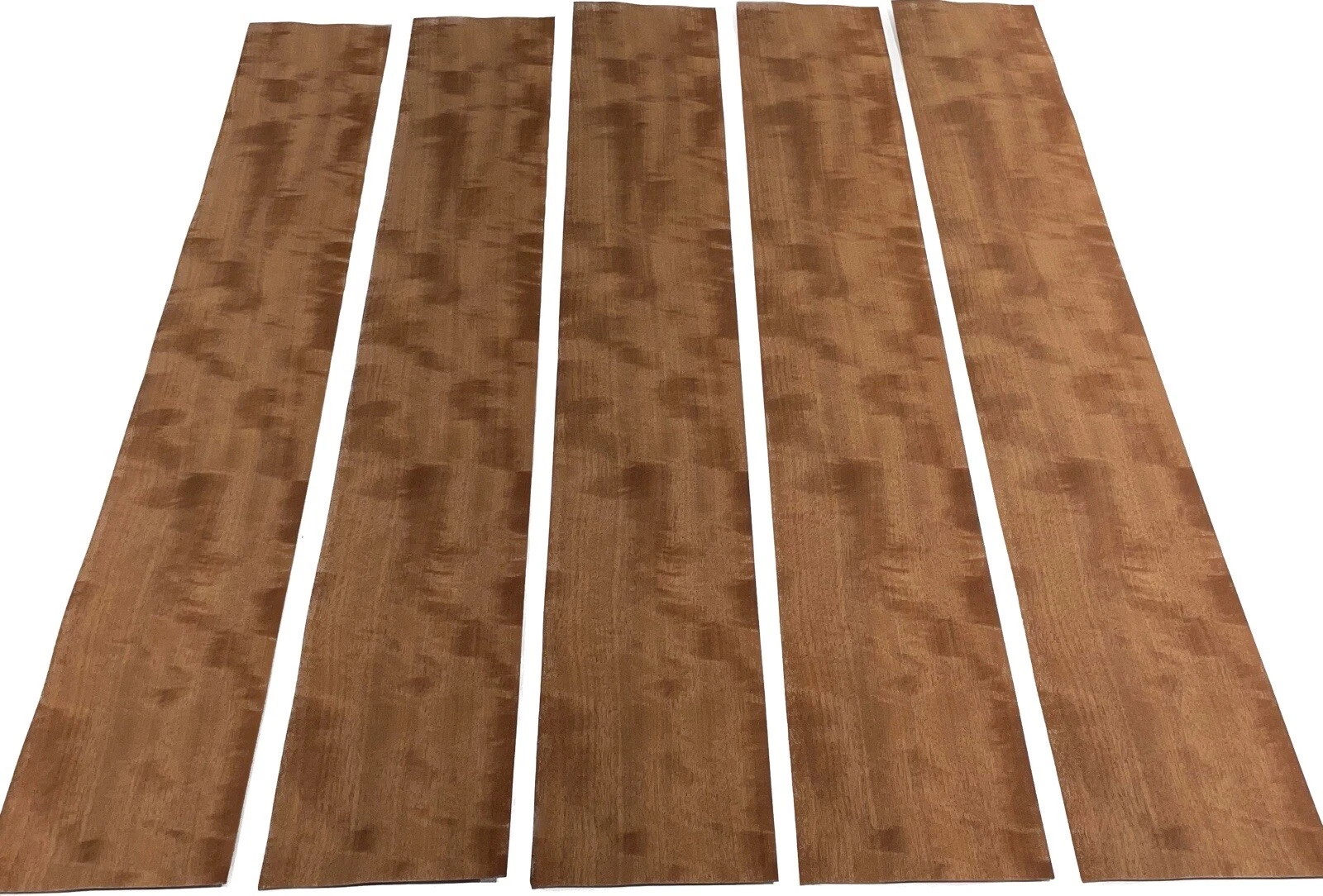
Plain makore wood reads as a clean, even reddish-brown. Think of it as a tighter, finer cousin to african mahogany. What makes it special is the figure. The grain is often interlocked. That means light bounces off the surface in shifting bands. Even flat cuts get a subtle depth from it.
The figured cuts are where makore earns its price. Quilted makore veneer shows a rolling, blistered pattern with real depth. Mottle figured sheets break the surface into a rippling shimmer. You will also find fiddleback, a tight, ribbon-like curl. And quartered makore gives a straight, ribbon-striped look, cut on the quarter for clean lines. Under a clear finish, all of these come alive. The wood almost glows.
Color deepens with age and sunlight. It moves from pinkish brown toward a richer red-brown. A UV-resistant topcoat slows that shift if you want to hold the fresh tone.
Working and finishing tips
Makore is a pleasure to slice and press when your tools are sharp. But keep reading, because it has a real quirk.
Glue-up is simple. Use standard PVA, contact cement, or urea formaldehyde. The fine, closed grain takes stain and clear coats evenly. You won't fight the blotching that softer woods give you. Oil, shellac, lacquer, and water-based finishes all work well. A thin coat of dewaxed shellac as a first seal makes the shimmer pop. Sand up to 220 grit and the surface polishes to a natural luster.
Best uses
Makore's warm color and shimmer suit it to work you'll see and touch every day. Think fine furniture and cabinetry, drawer fronts, marquetry, luxury panels, and musical instruments. Guitar and instrument builders like its tone and its looks. See our guide to veneer for guitars and luthiers. The fine grain also makes clean miters and inlays. That makes it a favorite for boxes and marquetry.
[Buy makore veneer on eBay →]
- Pommele Sapele, similar rolling figure in a redder tone
- Sapele, the classic african mahogany alternative
- Anigre, another fine-grained West African veneer
Browse the full wood veneer types guide, or head to the shop to see what's in stock.
---
Sustainability and sourcing
Makore is not listed under CITES. But it is classed as endangered on the IUCN Red List after decades of heavy logging. That's exactly why we sell it as thin veneer. A single board yields dozens of veneer sheets. So one rare tree stretches across far more projects than solid lumber ever could. Using makore wood in thin slices is the whole point of WoodCycle.
Available now on eBay
Every sheet below is a live WoodCycle listing. We are US-based and ship fast, usually within one business day.
Frequently asked
Is makore veneer the same as African Cherry?
Yes. "African Cherry" is a common trade name for makore (*Tieghemella heckelii*). It isn't a true cherry. The name just comes from its warm, cherry-like red tone.
Can I stain makore like other wood?
You can, but you usually won't need to. The natural pinkish brown color is the draw. The fine, even grain takes stain cleanly if you want to shift the tone. You get little of the blotching you'd fight on maple or pine.
What's the difference between quilted and quartered makore veneer?
Quilted makore veneer shows a rolling, blistered figure with lots of depth. Quartered makore is cut on the quarter for a straight, even, ribbon-striped grain. One is dramatic. The other is clean and steady.
Is makore dust dangerous?
It's a strong irritant. The fine dust bothers your eyes, throat, and skin. It can also trigger asthma in some workers. Always wear a mask or respirator. Use dust collection when you cut or sand.
Need another species for the project?
Browse the full species library or shop live listings on eBay.