
4,700+ sold · 100% feedback · US-based
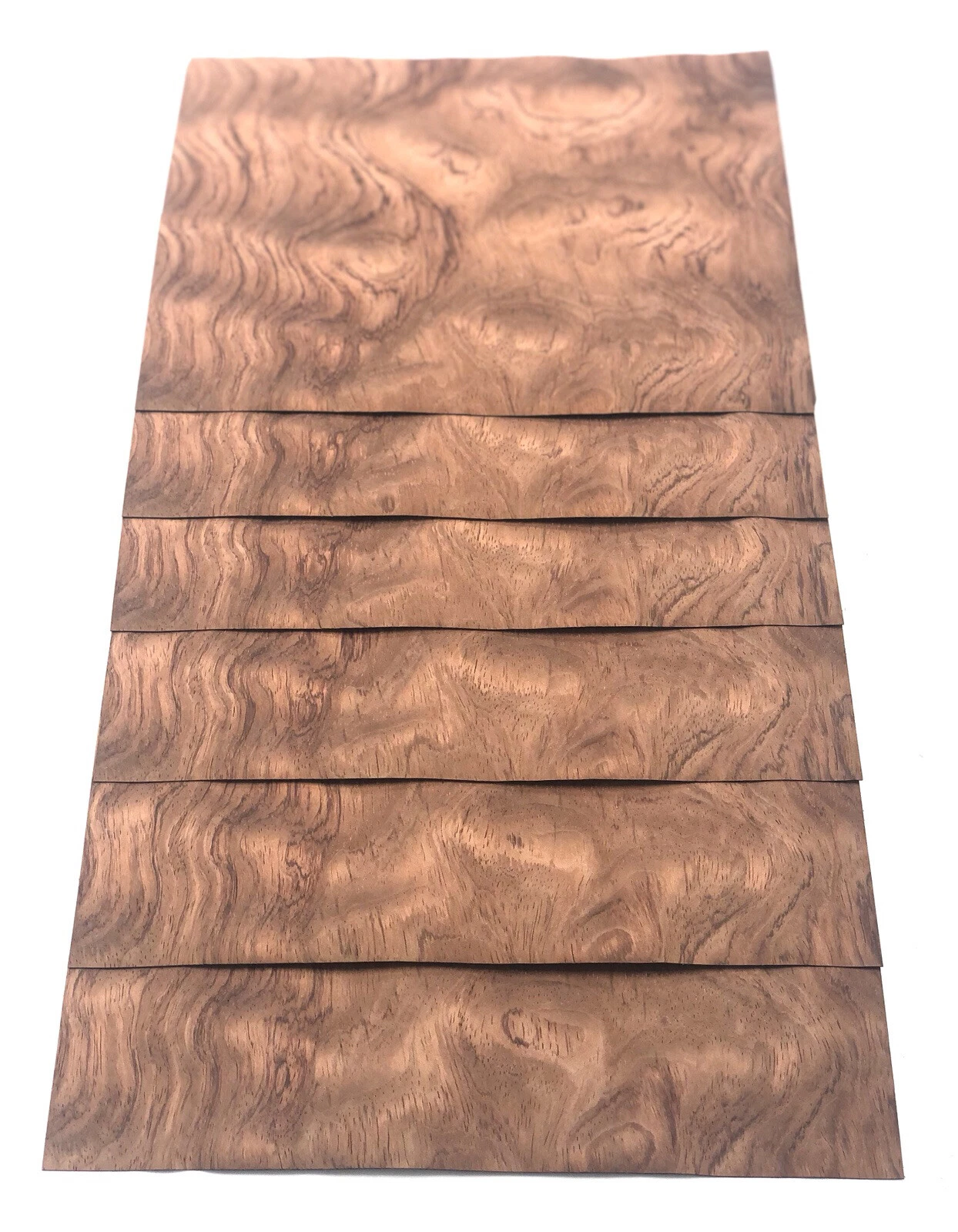
Pommele sapele veneer is one of the most three-dimensional surfaces you can lay on a project. The figure looks like a field of soft, overlapping bubbles, a dense, suede-like puddling that woodworkers call "pommele" (French for "dappled," like a dappled horse). Tilt the sheet and the whole surface lights up and shifts, because pommele carries strong chatoyance. It is a wild, high-figure look for makers who want their veneer to be the star of the piece.
What is pommele sapele veneer?
Pommele is a figure, not a species. It comes from sapele (Entandrophragma cylindricum), a large hardwood from tropical West and Central Africa, the same tree behind ribbon-striped sapele veneer. Now and then a sapele log grows with a rippling, blistered grain instead of the usual straight ribbon. Sliced into thin wood veneer, that grain reads as thousands of small, rounded mounds packed edge to edge, like rain on a window or a quilted landscape. Because the effect is rare and shows up in only a fraction of logs, pommele veneer sheets sell at a premium over plain sapele.
The color is classic sapele: a warm reddish brown, sometimes leaning toward gold or a deeper red depending on the light and the finish. Under a clear coat the reddish brown deepens and the pommele blisters pop into sharp relief.
Quick facts
Appearance and figure
The selling point of pommele veneer is depth. Each little blister catches and bends light differently from its neighbors, so the surface never looks flat. This is chatoyance, the same shimmer you see in tiger's eye stone or a cat's eye. As you or a viewer move around the piece, bright and dark blisters trade places and the figure appears to roll across the wood. A finished panel looks almost liquid.
Figure density varies sheet to sheet. Some pommele sapele runs fine and tight, like small hail; some runs bigger and more open. We shoot every sheet under raking light so you can see exactly what you're buying before it ships.
Quick facts
- Origin: West and Central Africa
- Species: Sapele (Entandrophragma cylindricum)
- Color: Reddish brown, often with gold or deep-red glow
- Figure: Dense pommele, suede-like blister with strong chatoyance
- Janka hardness: ~1,410 lbf (harder than red oak)
- Typical thickness: ~0.5 mm raw veneer
- Workability: Tricky, interlocked, high-figure grain
Working and finishing tips
Pommele sapele is beautiful and a little difficult, and we would rather tell you that up front.
The figure tears out. Sapele's grain is interlocked, and the blistered pommele figure makes it worse, the grain direction reverses constantly across the sheet. A dull blade or a hard scrape lifts little chips right out of the blisters. Use a fresh razor knife, tape both faces of the sheet before you cut, and score in shallow passes rather than trying to slice through in one stroke. If you sand, go light and finish by hand at 320 grit or higher so you don't flatten the figure.
It photographs differently than it looks in person. Chatoyance means the sheet changes with the light. A photo freezes one angle, so a picture can look duller, or busier, than the wood does on your bench. That is why we shoot each sheet ourselves under moving light instead of using stock images. What you see in the listing is the actual piece you'll receive.
Glue and finish. Flatten curled sheets with light misting and a press before glue-up. Pommele sapele takes PVA (wood glue), contact cement, or urea-formaldehyde well on a paper, wood, or phenolic backer. For finish, an oil or a clear coat wakes up the chatoyance best; a wipe of shellac as a sealer keeps the reddish brown even and stops blotching.
Best uses
Because the figure is so loud, a little pommele goes a long way. Makers reach for it when they want a showpiece surface:
- Guitar tops, headstock veneers, and speaker cabinets, see veneer for guitars and luthiers.
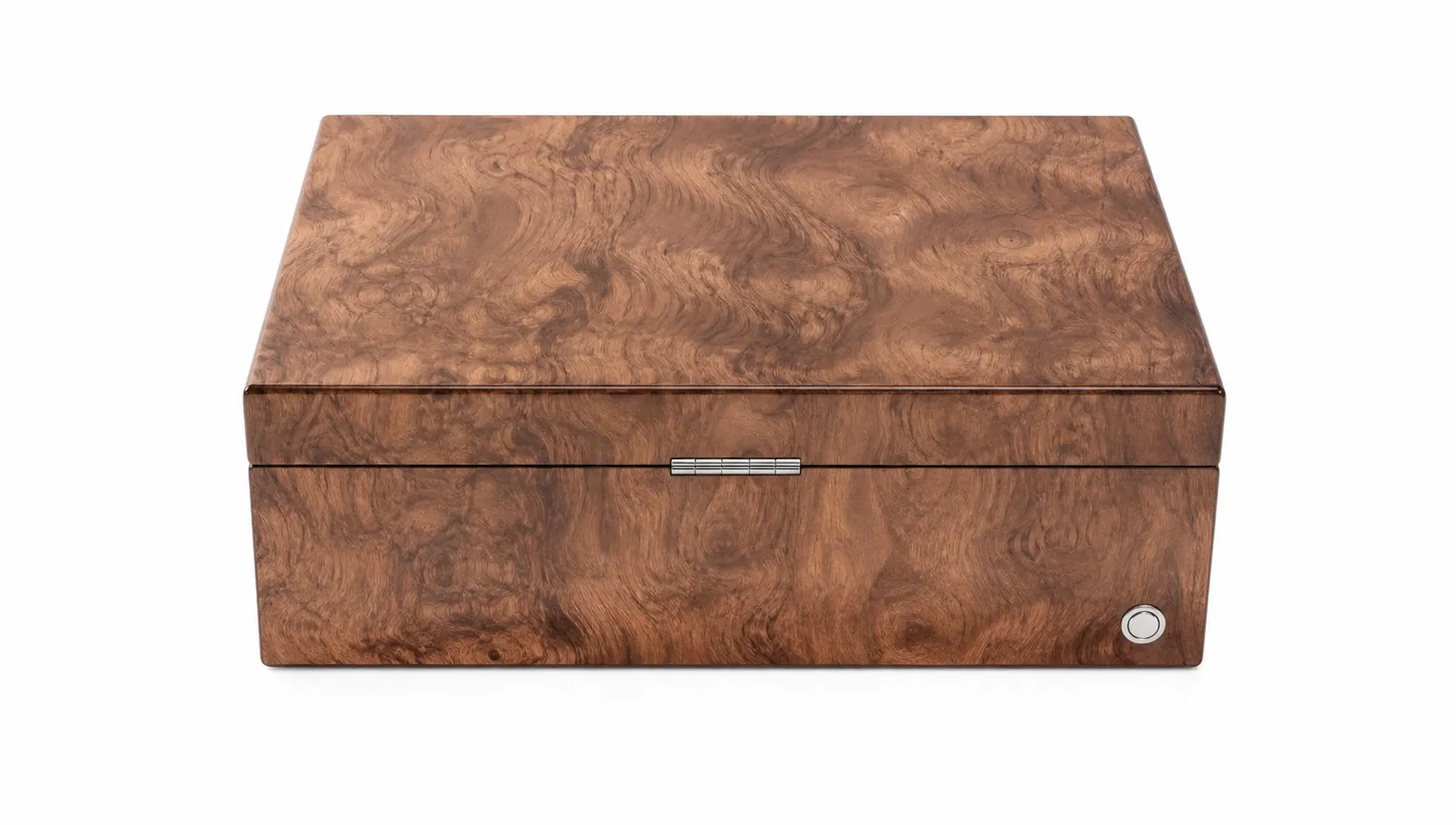
- Jewelry boxes, humidors, and marquetry accents, see veneer for boxes and marquetry.
- Pen blanks and knife-scale facings, where one small sheet covers many pieces, see veneer for pens and knife scales.
- Furniture door panels, drawer fronts, and dashboard-style inlays.
For a similar three-dimensional shimmer in a different color, look at pinkish-brown figured makore or the swirling grain of walnut burl. To learn how figures like this form, read the wood veneer types guide.
Sustainability and sourcing
Pommele comes from unusual, high-figure sapele logs, the kind that would be wasted if milled into plain boards. Slicing them thin as veneer stretches one rare log across dozens of projects instead of a handful, which is the whole idea behind WoodCycle. Sapele is not CITES-listed, though it is considered vulnerable in the wild, so making the most of every figured log matters.
Available now on eBay
Every sheet below is a live WoodCycle listing. We are US-based and ship fast, usually within one business day.
Frequently asked
What is pommele figure?
Pommele is a dense, blister-like grain pattern of small rounded bumps packed together, with strong chatoyance that shifts as light moves. It shows up in a fraction of sapele logs, which makes it rarer and pricier than plain sapele.
Is pommele the same as sapele?
Pommele is a figure found in sapele, not a separate wood. Pommele sapele veneer is sapele that grew with this blistered grain instead of the usual straight ribbon stripe.
Is pommele sapele veneer hard to work with?
The interlocked, high-figure grain tears out easily. Tape both faces, use a sharp fresh blade, cut in shallow passes, and sand lightly. Done carefully it finishes beautifully.
What color is pommele sapele?
A warm reddish brown that can glow gold or deep red under light. A clear finish deepens the reddish brown and makes the pommele blisters stand out.
Can I return it?
Yes. Buying on eBay means your order is covered by buyer protection, including return shipping if the veneer sheets aren't what you expected.
Need another species for the project?
Browse the full species library or shop live listings on eBay.