4,700+ sold · 100% feedback · US-based
Choosing laser-friendly veneer
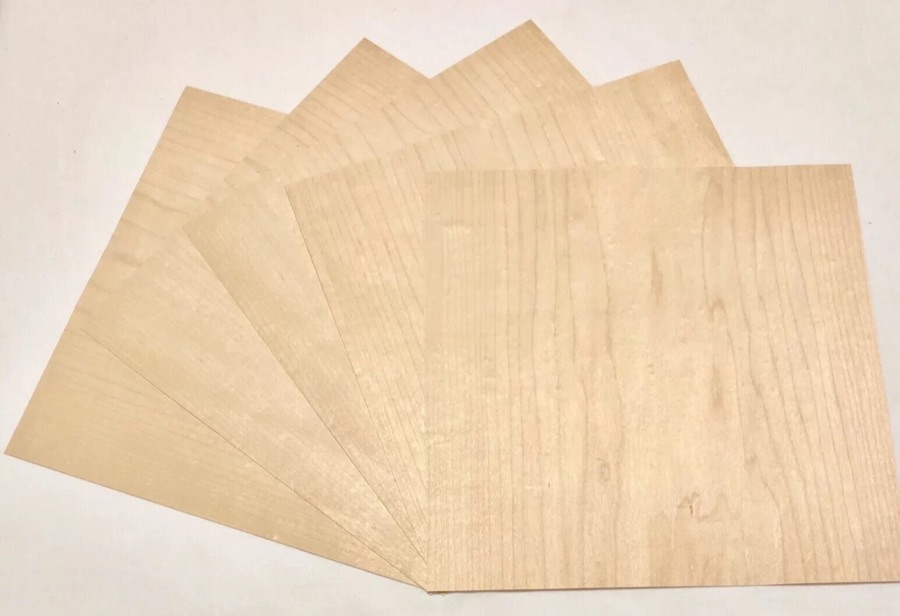
Start with flat, consistent sheets. Pale species like maple, ash, and white poplar show engraving clearly. Dark species like walnut, wenge, and ebony give strong contrast when cut into light substrates. Dyed veneer is useful for color-coded layers or decorative accents.
Raw veneer cuts fast but can be fragile in tiny shapes. Paper-backed veneer is easier to handle for larger overlays, labels, and sign faces.
Species and contrast
Maple, ash, walnut, sapele, dyed veneer, composite rosewood, and black limba are practical picks. Use high-contrast species for inlay and pale species for engraved details. Test power settings because density, glue, and backing all change the edge color.
Laser and CNC setup tips
Keep the sheet flat with low-tack tape, a honeycomb hold-down, or a sacrificial carrier. Cut small parts before the outer profile so the sheet does not shift. For CNC inlay, leave a test allowance and sneak up on fit before cutting rare figured veneer.
Available now on eBay
Every sheet ships from the USA. We post real photos, so the figure you see is the figure you get.
Frequently asked
Can veneer be laser cut?
Yes. Thin veneer cuts cleanly with the right settings, especially when it is flat and held down well.
What veneer is best for laser engraving?
Maple, ash, and other pale straight-grain veneers show engraving clearly.
Should I use raw or paper-backed veneer for laser cutting?
Raw veneer is best for fine inlay. Paper-backed veneer is easier to handle for overlays, labels, and larger sign pieces.
Need a matched size or quantity?
Ask about wholesale and custom cuts, or grab live sheets from the eBay store.