
4,700+ sold · 100% feedback · US-based
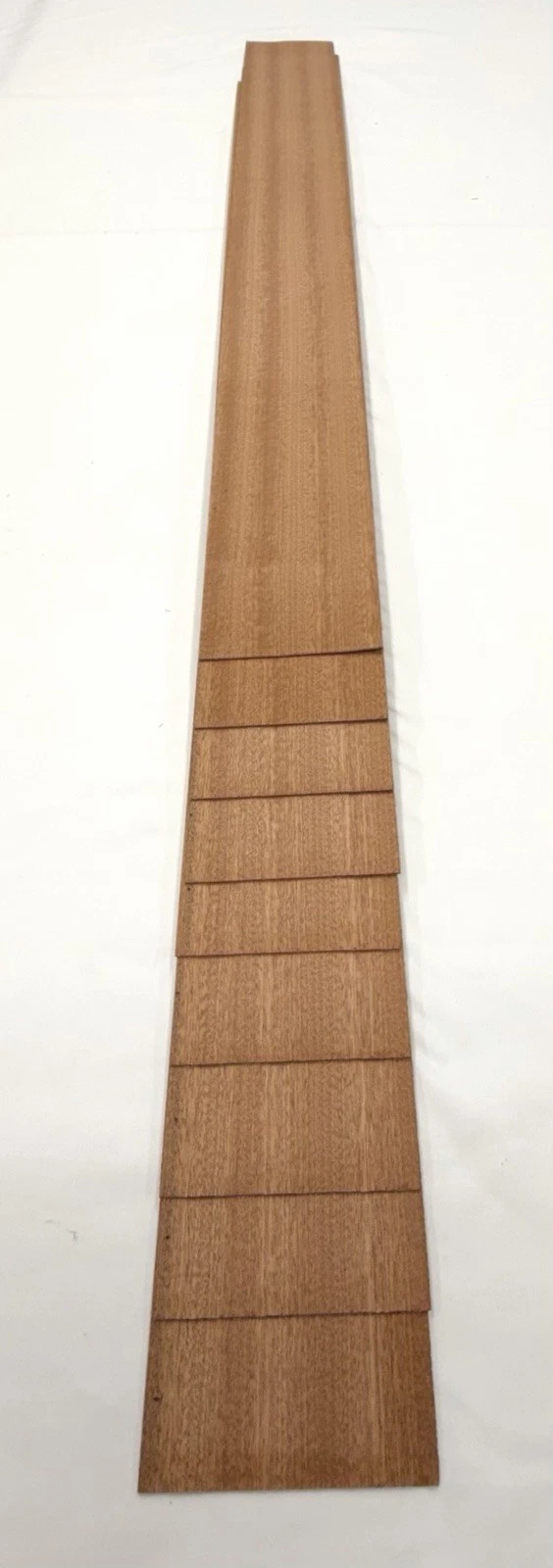
Sapele is the wood behind that famous ribbon stripe. Quarter-cut sapele veneer shows alternating light and dark bands that shift as you move, a shimmer woodworkers have loved for a century. The color is a warm red brown that deepens over time, and the price stays friendly. If you want a classic, mahogany-like look without the mahogany price, sapele is the answer.
We cut sapele into small, maker-friendly veneer sheets and photograph each one, so the figure you see is the figure you get.
What is sapele veneer?
Sapele veneer is a thin slice of real wood cut from Sapele. It is used to bring the look of the species across a much larger surface than solid stock would allow, and it keeps more of each log in play for real projects. This stock traces back to West and Central Africa. Botanical name Entandrophragma cylindricum..
Quick facts
Color: Reddish brown to deep red brown heartwood, often with a golden cast under light.
Figure: Ribbon stripe on quarter-cut; also pommele, quilted, and mottled figured variants.
Janka hardness: about 1,410 lbf, harder than genuine mahogany and most oak.
Grain: Interlocked, fine and even. Beautiful, but the reason for careful cutting.
Workability: Cuts and finishes well; interlocked grain can tear out if you rush.
Sheet sizes: small craft and sample sizes, ready to ship.
Appearance and figure
Sapele belongs to the mahogany family, and it looks the part. The heartwood is a rich reddish brown that darkens with age and light exposure into a deeper, redder tone. What sets sapele apart is the grain. As the tree grows, its fibers spiral in alternating directions, a trait called interlocked grain. When the log is quarter sliced, those alternating fibers catch light differently and produce the signature ribbon stripe, a run of parallel light and dark bands that seems to move as you shift your view. This is chatoyancy, the same optical shimmer that makes curly maple glow.
Beyond the everyday ribbon, sapele throws some of the most prized figure in the veneer world. Pommele sapele looks like a surface of small, overlapping bubbles or puddles, a rippling three-dimensional effect that photographs beautifully. Quilted sapele shows soft, blistered waves. Mottled and fiddleback figure add cross-fire ripples. These figured variants are rare and command a premium. If pommele is what you are after, see our page on pommele sapele veneer.
[See What's In Stock on eBay →]
Working and finishing tips
Sapele glues well with ordinary wood glues. PVA (wood glue), contact cement, and urea formaldehyde all bond it cleanly to a substrate. Cut it with a sharp veneer saw or a fresh razor knife and a straightedge, backing the cut so the interlocked grain cannot chip. Sand up through the grits and the surface polishes to a fine sheen. Sapele takes stain and clear coats readily, though its natural red brown color is lovely on its own, and a simple clear finish makes the ribbon pop. An oil or shellac wash coat before topcoat helps even out absorption.
Best uses
Sapele is a workhorse of fine furniture, cabinetry, and architectural paneling, and it is a serious tonewood, showing up on guitar backs, sides, and necks. Makers reach for it on doors, boat interiors, luxury car dashboards, and any project that wants a warm mahogany look on a real budget. The ribbon stripe makes it a favorite for door panels and tabletops, where the shifting bands draw the eye.
Sustainability and sourcing
Using veneer makes each log go further by turning a small amount of real wood into much more usable surface area.
Available now on eBay
Every sheet below is a live WoodCycle listing. We are US-based and ship fast, usually within one business day.
Frequently asked
What is sapele veneer used for?
Fine furniture, cabinetry, doors, wall paneling, boat interiors, car dashboards, and guitars. Its warm red brown color and ribbon stripe make it a budget-friendly stand-in for mahogany.
Is sapele the same as mahogany?
No, but it is a close relative in the same family and is sometimes called sapele mahogany. Sapele is harder than true mahogany and shows a stronger ribbon figure.
Why does sapele tear out when I cut it?
Its interlocked grain runs in alternating directions, so a dull blade lifts and chips the surface. Use a sharp blade, take light passes, and back-bevel or scrape the final cut.
Does sapele change color over time?
Yes. Sapele is photosensitive and reddens and darkens with age and light. Keep offcuts out of direct sun so later repairs still match.
Is sapele veneer sustainable?
Sapele grows across West and Central Africa, but the IUCN lists it as vulnerable in the wild from heavy logging. It is not CITES-listed. We cut it thin into small sheets to make the most of every log.
Need another species for the project?
Browse the full species library or shop live listings on eBay.