
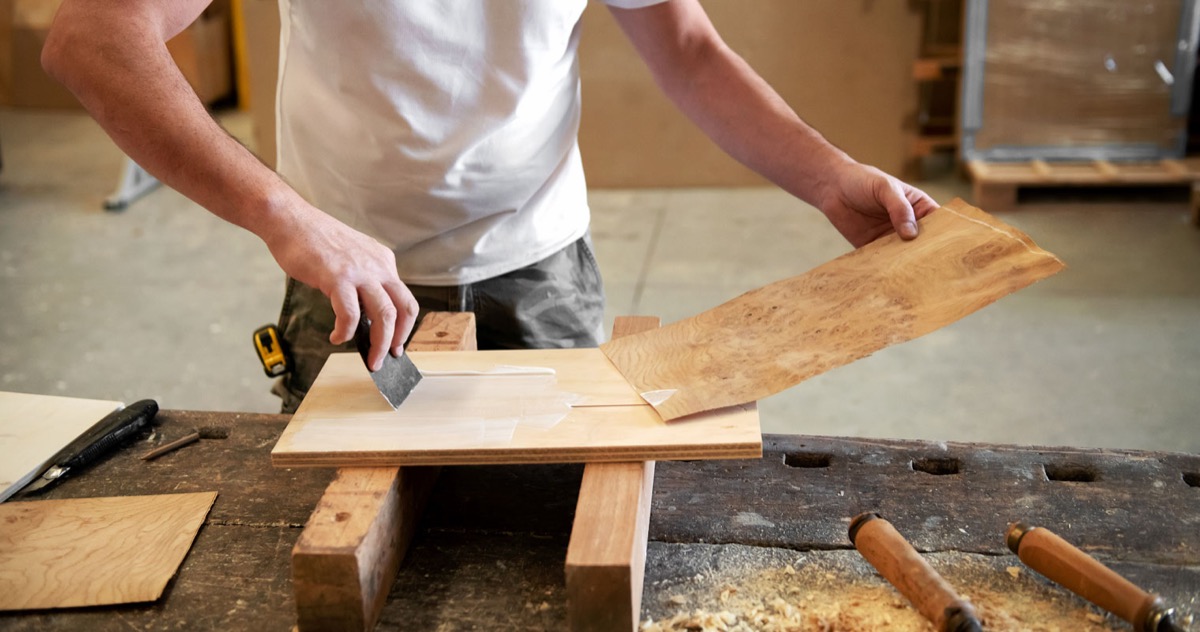
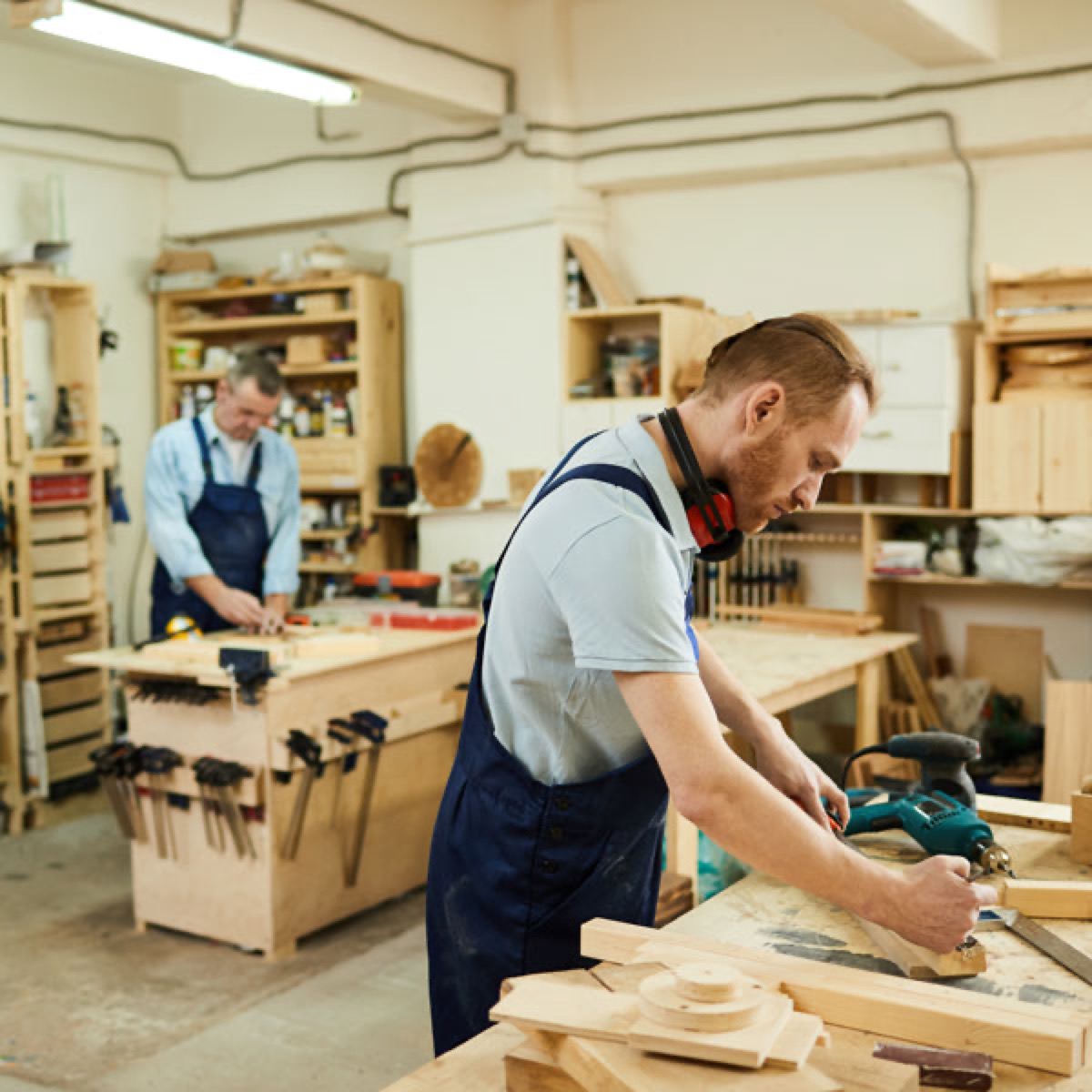
Wood veneer, explained
Because one log yields dozens of times more surface as veneer than as boards, veneer is how makers use rare, expensive and figured species affordably, and how a single beautiful tree stretches across a whole shop's worth of projects.
Types of wood veneer
"Veneer" covers a few different products. Picking the right one is the first decision on any project.
- Raw (unbacked) veneer: a bare wood slice, nothing on the back. The most flexible and affordable option, and the choice for book-matching and vacuum pressing.
- Paper-backed veneer: a 10-mil paper layer bonded behind the wood. It resists cracking, comes in large seamless sheets, and bonds well with contact cement, ideal for panels, doors and curves.
- Peel-and-stick (PSA) veneer: paper-backed with a self-adhesive layer. Peel, position, press. No glue, no clamps. Great for quick jobs and repairs.
- Phenolic / wood-on-wood backed: heavier backers for durability or a substrate that needs extra stability.
- Reconstituted & dyed veneer: engineered from fast-growing species for consistent color and figure, or dyed for grey and colored looks.
Raw vs paper-backed: which do I need?
Raw veneer is thinner and lets the wood speak for itself, but it can crack if handled roughly or glued without even pressure. Paper-backed veneer trades a little thickness for a lot of forgiveness: the backer holds everything together, so beginners get clean results sooner.
Cuts & matching
How a log is sliced changes the grain you see. Four cuts cover almost everything you will run into:
- Rotary cut: the log spins on a lathe while a wide knife peels it in one continuous ribbon, like unrolling a giant roll of paper. The look is broad, wild and bold, with no uniform grain source. Best for utility plywood, basic cabinets and backing pieces where you need wide sheets without a repeating pattern.
- Plain sliced (flat cut): also called crown cut. The log is halved and the flat face is sliced straight down, parallel to the center. This gives the familiar repeating "cathedral" or flame pattern in the middle, with straighter lines toward the edges. Best for fine furniture and doors where a traditional, natural wood look is wanted.
- Quarter sliced (quarter cut): the log is cut into four quarters and each quarter is sliced perpendicular to the growth rings. The look is straight, uniform "stripy" lines, and in woods like oak it throws reflective ray flecks. Best for high-end architectural panels and modern, clean-lined furniture.
- Rift cut: a quartered log sliced at a slight angle, about 15 degrees off the quarter position. This kills the ray-fleck look and leaves very straight, tight, narrow lines. Best when you need a highly uniform, combed, straight grain, especially in oak.
- Burl, pommele, curl & birdseye: figure caused by growth stress, knots or dormant buds. No two sheets are alike; these are the showpieces.
Sheets from the same log are sequenced so you can book-match (flip like pages for a mirror image) or slip-match (repeat side by side). Grain traditionally runs along the long dimension of a sheet. Plan your layout before you cut.
How to apply wood veneer
Three reliable methods, from most to least equipment:
- Glue + press (best bond). Spread PVA wood glue or urea-formaldehyde on the substrate, position the veneer, and press flat in a vacuum bag or between clamped cauls until cured. This is the gold standard for panels and curves.
- Contact cement (no press). Coat both the veneer back and the substrate, let it flash off until tacky, then align carefully: it grabs on contact, so there's no repositioning. Roll firmly from the center out.
- Peel-and-stick. Trim slightly oversize, peel the liner, burnish down hard with a veneer roller or wood block, then trim flush.
Always veneer both faces of a panel. A bare back and a veneered front pull unevenly, and the panel will warp. Add a backer veneer to keep it flat.
Cutting & finishing
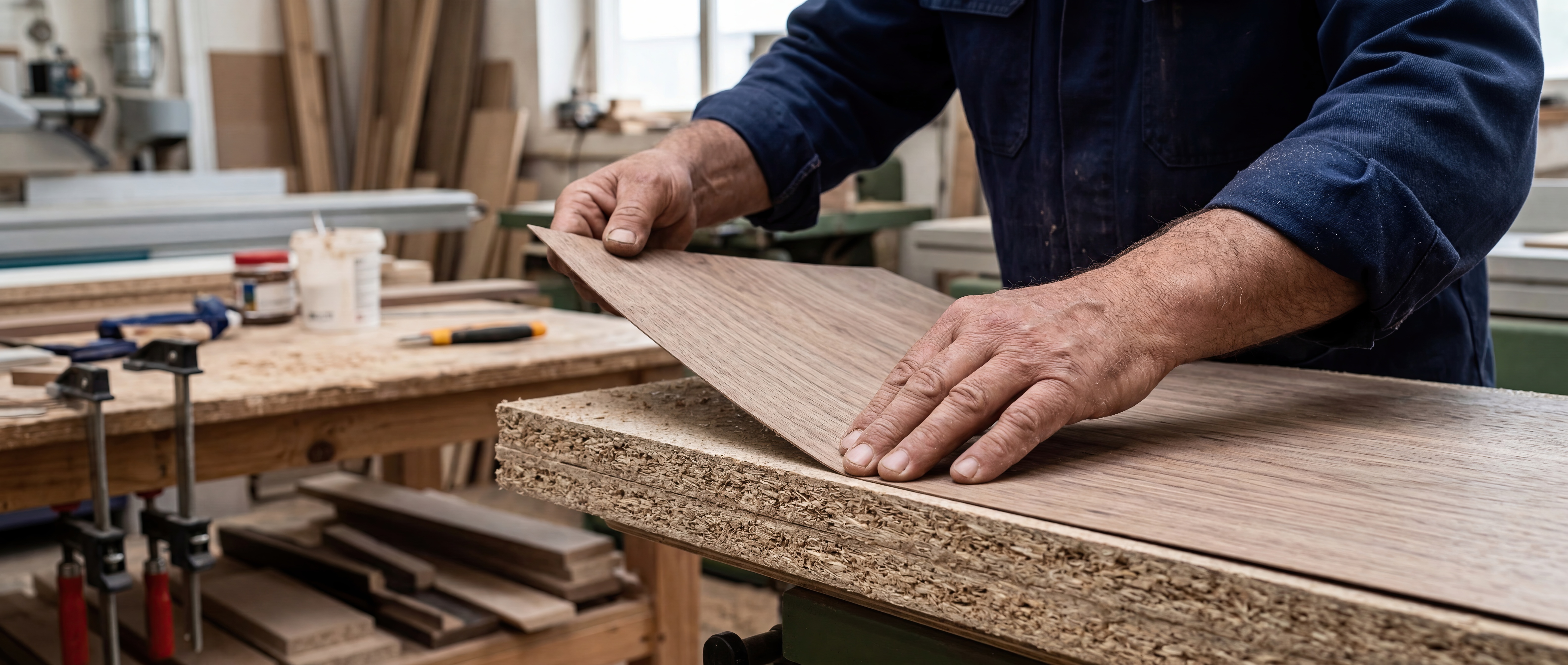
Cut along a straight edge with a sharp veneer saw or a fresh razor knife, scoring in light passes rather than one deep drag to avoid tear-out. Support the offcut so it doesn't split.
Once bonded, sand gently to 220 grit. Veneer is thin, so never sand aggressively. Then finish it like any real wood: an oil or wipe-on poly deepens the color, lacquer builds a durable clear coat, and wax adds a soft sheen. A clear finish alone is usually enough to make figure and chatoyance come alive.
Frequently asked
What is the difference between raw and paper-backed veneer?
Raw veneer is a bare slice of wood, best pressed with glue. Paper-backed veneer has a 10-mil paper layer that resists cracking and works with contact cement. Peel-and-stick adds a self-adhesive backing for no-press application.
What glue works best?
PVA wood glue or urea-formaldehyde with a press; contact cement for flat panels without a press; peel-and-stick backing needs no glue at all.
Can I stain and finish it like solid wood?
Yes, it is real wood. Sand to 220 grit and apply stain, oil, lacquer or wax exactly as you would on solid lumber.
How is veneer priced?
Most raw and paper-backed veneer is sold per square foot; craft packs and sampler bundles ship at a flat price. Figured and exotic species cost more per square foot than plain domestics.
Ready to pick your wood?
Browse the species library, then grab live sheets from our eBay store.