
4,700+ sold · 100% feedback · US-based
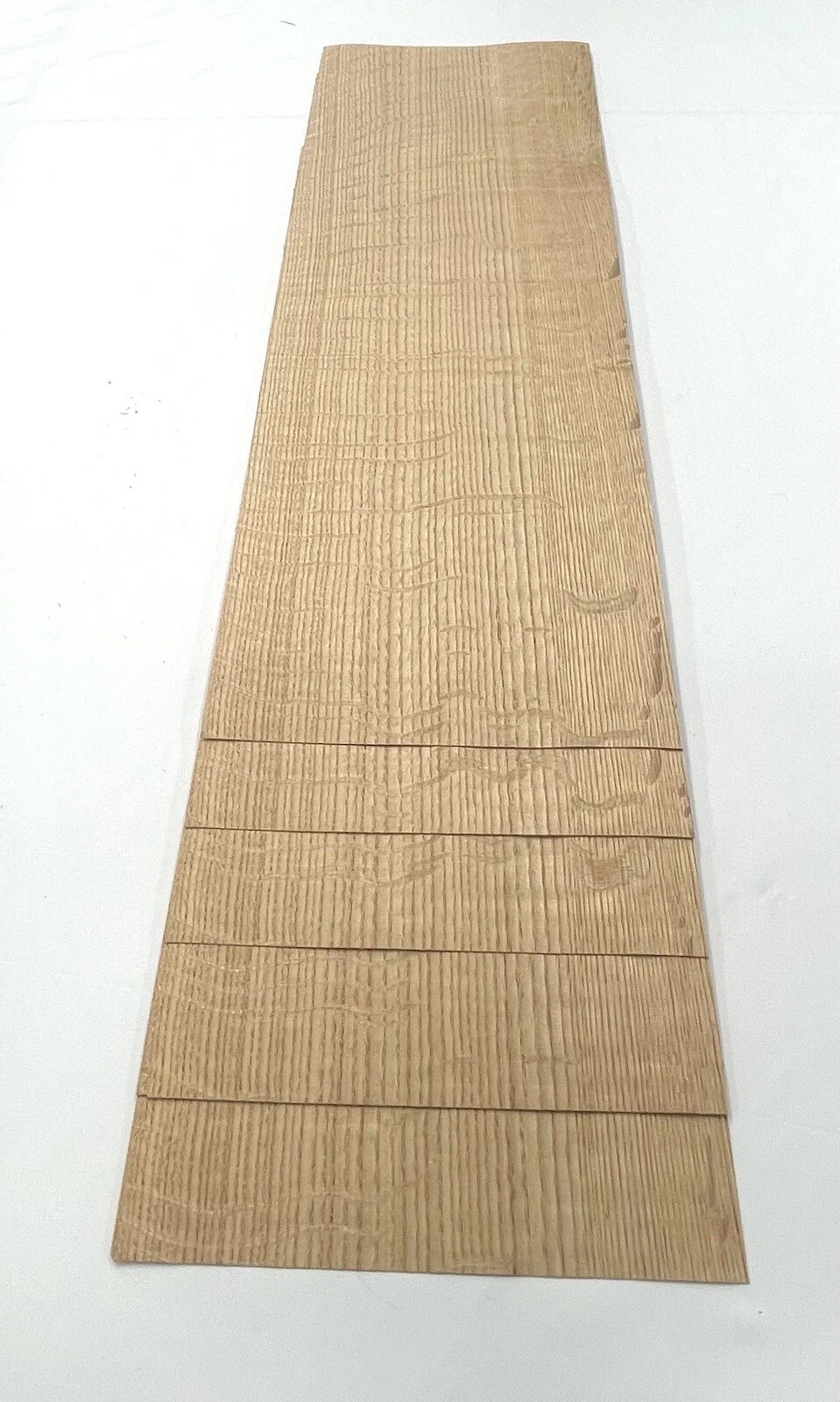
Red oak is the classic American cabinetry wood, and for good reason. Its pinkish brown color and bold, open grain give plain sliced sheets that unmistakable cathedral figure that has furnished homes for generations. If you want red oak veneer sheets with real character and a fair price, this is genuine wood veneer worth stocking.
We cut and sell red oak veneer by the square foot in small, maker-friendly sizes.
What is red oak veneer?
Red oak veneer is a thin slice of real wood, Northern red oak (Quercus rubra), a native hardwood of the eastern United States. Slicing it thin stretches one board across many sheets, so a single tree covers far more surface than the same log sawn into solid lumber. Because it is genuine wood veneer, not a printed laminate, it sands, stains, and finishes exactly like the solid board it came from.
Quick facts
Origin: Eastern United States
Color: Pinkish to reddish brown, warmer toned than white oak
Grain / figure: Bold, open grain with strong cathedral figure on plain sliced stock
Cut: Plain sliced
Janka hardness: About 1,290 lbf
Thickness: We stock 1/45 inch raw and thicker options
Backing: Raw, or paper backed veneer on request
Workability: Good, though its open pores need a grain filler for a glass smooth finish
Sold: By the square foot, ready to ship
Appearance and figure
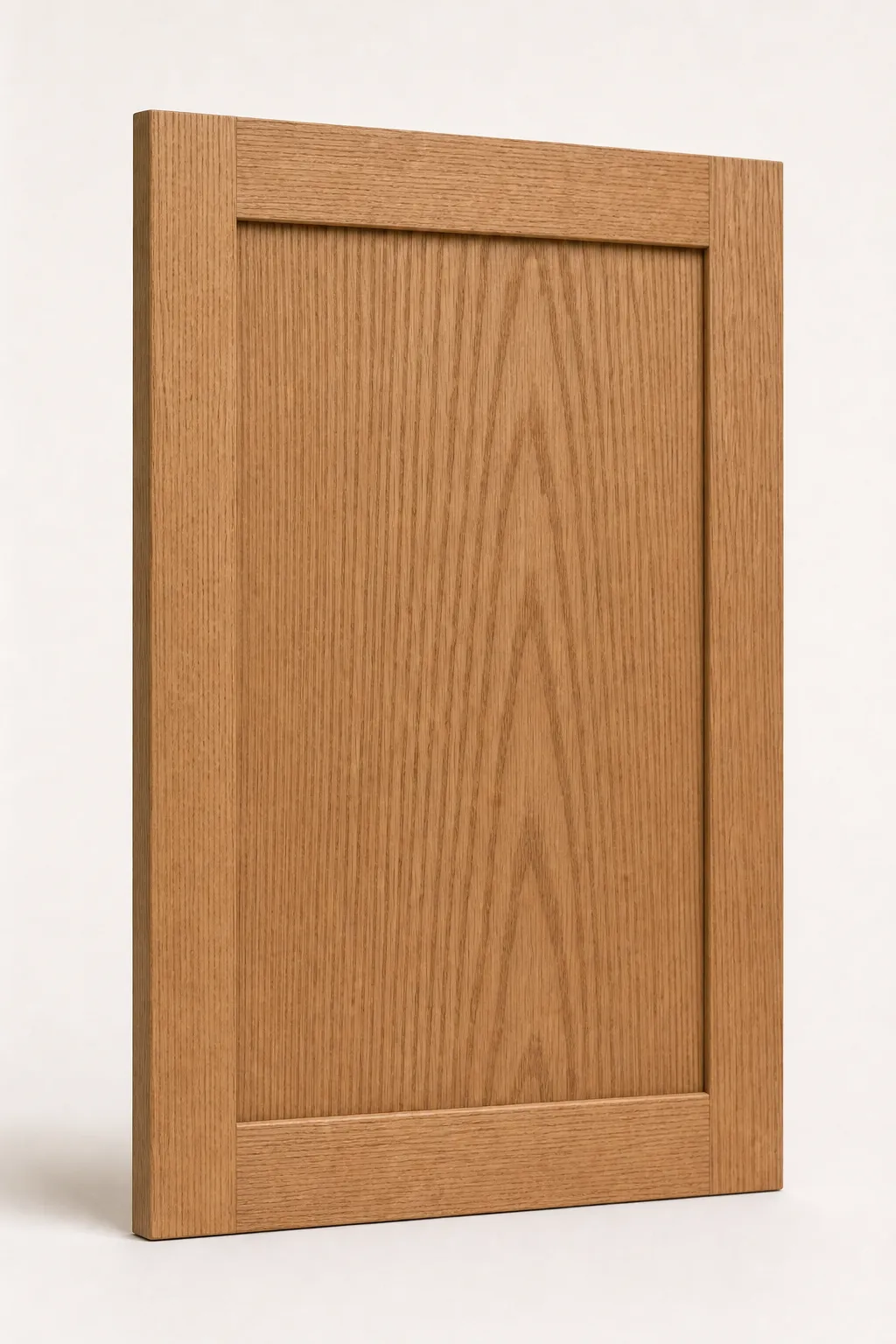
Red oak carries a warmer, pinker cast than its cousin white oak, with the same bold, open grain that has defined American furniture for decades. Plain sliced sheets show a strong cathedral pattern, wide arcs of grain that read clearly even under a light finish. It is an unmistakable look, familiar without being plain.
[Buy red oak veneer on eBay →]
Working and finishing tips
Red oak cuts and presses well with a sharp razor knife and standard wood glue or contact cement. Its open, porous grain is the one thing to plan around: stain alone can look uneven, so many makers use a grain filler or conditioner first for a smooth, glass like finish. Sand to about 220 grit before finishing.
Honest cautions.
- Open grain takes stain unevenly. Use a grain filler or a pre stain conditioner if you want a perfectly smooth, uniform look.
- Porous surface can telegraph substrate texture. Make sure your bonding surface is smooth and flat before pressing.
- Reacts with iron. Contact with iron fasteners or steel wool in a humid environment can cause dark staining. Use stainless hardware where it matters.
Best uses
- Cabinetry and furniture. The traditional American look, from kitchen cabinets to case pieces.
- Flooring look alike panels. The grain reads as classic hardwood flooring when used on furniture faces.
- Boxes and marquetry. A budget friendly domestic with real visual presence. See Veneer for Boxes & Marquetry.
For a cooler, more neutral alternative, compare our European White Oak. Browse the full Wood Veneer Types pillar or head to the Shop.
Sustainability and sourcing
Red oak is one of the most abundant hardwoods in North America. It carries no CITES listing and is rated Least Concern by the IUCN. Slicing it into veneer stretches a plentiful tree even further, less waste for the same beautiful surface.
Available now on eBay
Every sheet below is a live WoodCycle listing. We are US-based and ship fast, usually within one business day.
Frequently asked
What is the difference between red oak and white oak veneer?
Red oak has a warmer, pinker tone, while white oak leans more olive brown and neutral. Both share the same bold, open grain.
Is red oak veneer easy to finish?
Its open, porous grain can take stain unevenly, so many makers use a grain filler or conditioner first for a smooth, uniform result.
Can red oak veneer be used for flooring look projects?
Yes, its grain reads like classic hardwood flooring, which makes it popular for furniture faces that want that familiar look.
Why did my red oak stain look blotchy?
That is the open grain absorbing stain unevenly. A pre stain conditioner or grain filler solves it.
Where does your red oak come from?
Northern red oak grown in the eastern United States. It is not CITES listed and is rated Least Concern, a responsible, sustainable choice.
Need another species for the project?
Browse the full species library or shop live listings on eBay.