4,700+ sold · 100% feedback · US-based
Larch is a deciduous conifer, a softwood that drops its needles each fall, and its wood punches well above its class. Larch veneer shows warm honey to reddish-brown color, bold straight grain, and prominent growth rings that give small sheets real character. If you want a softwood with the toughness and warmth to carry a project, this is it.
What is larch veneer?
Larch veneer is thin sliced wood from the larch tree (Larix decidua, European larch), a fast-growing conifer prized for tough, resinous, decay-resistant timber. Unlike most conifers, larch drops its needles each autumn, and that hard-living growth shows up in the wood: dense latewood, strong color, and a straight grain you can read at a glance.
Makers reach for larch wood veneer when they want the warmth of a softwood but more backbone than pine or spruce. It is a favorite for exterior joinery, boats, and character interiors, and it brings that same honest, rustic feel to boxes, panels, and laser work at veneer scale.
Quick facts
Origin: Europe
Color: Warm honey to reddish-brown heartwood; pale yellow sapwood
Grain / figure: Strong straight grain, prominent growth rings, knots common
Janka hardness: ~830 lbf, hard and stiff for a softwood
Workability: Good, with cautions (resin, ring contrast, see below)
Typical thickness: ~0.6mm raw wood veneer
Sheet sizes: small maker-friendly sheets, sold ready to ship
Appearance and figure
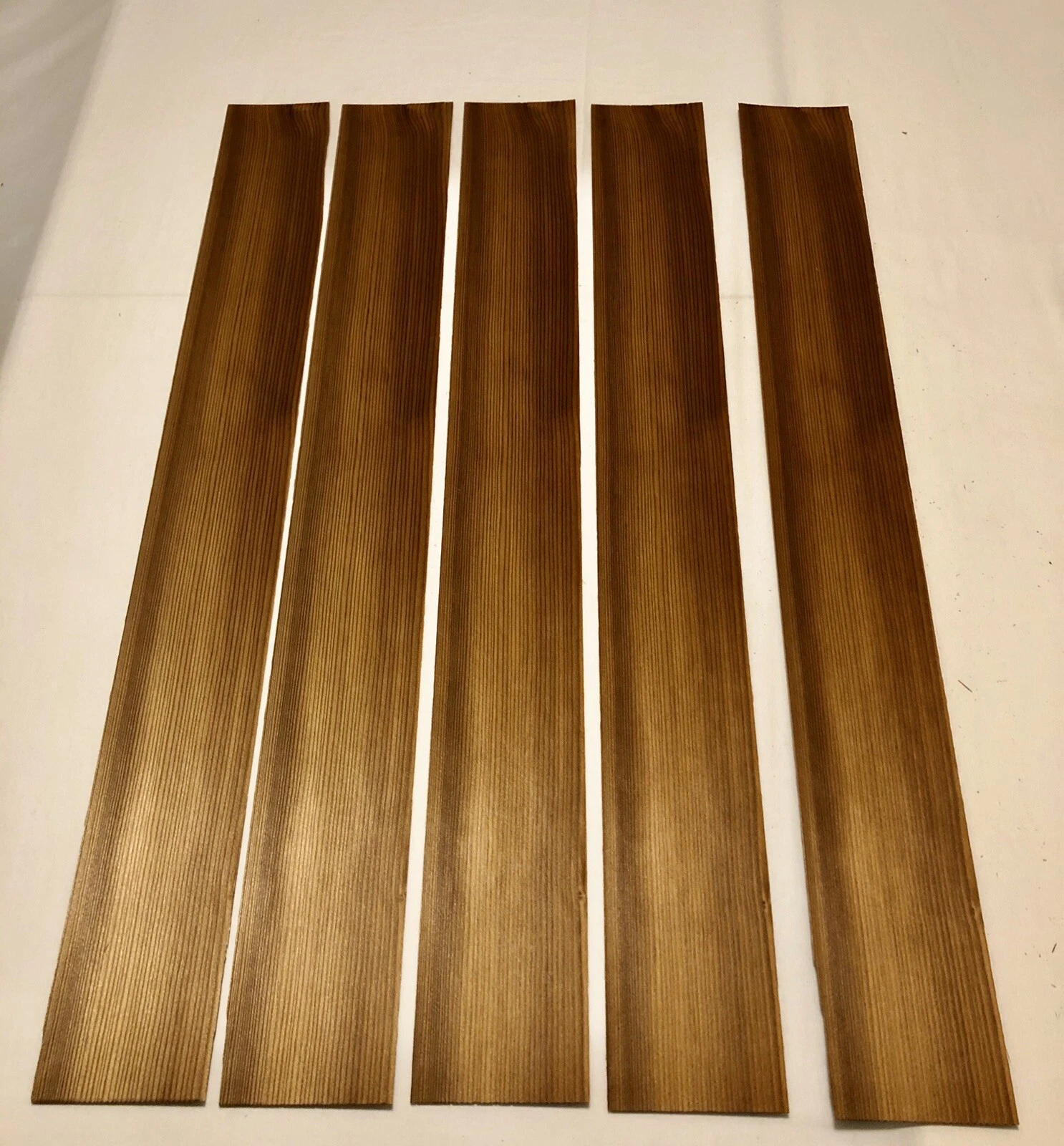
The heartwood runs warm, honey-amber to a deep reddish-brown or terracotta, with a thin band of paler yellow sapwood. Color varies with where the tree grew, so expect some sheet-to-sheet range; that variation is part of the charm.
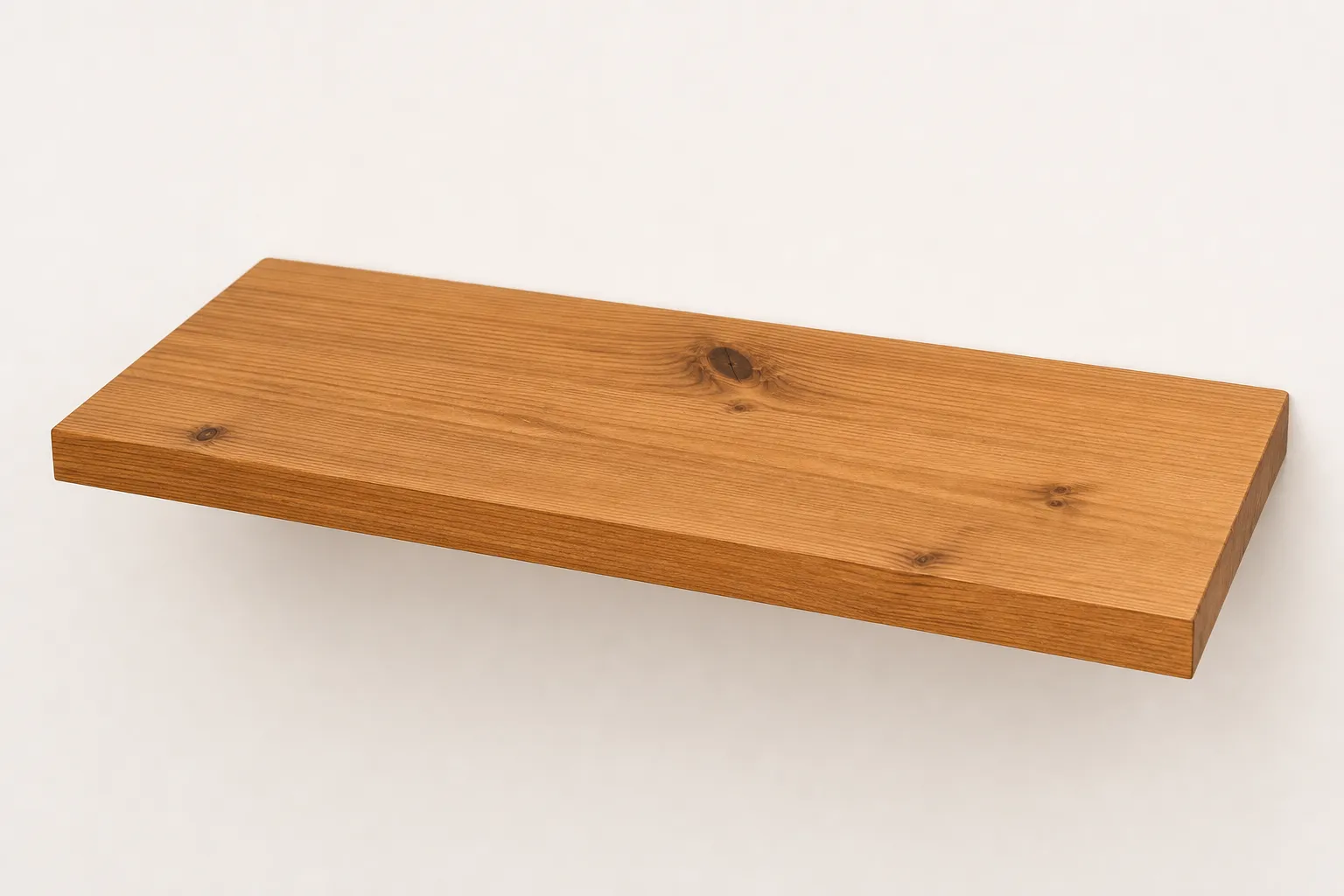
The star of the show is the grain. Larch has a strong straight grain marked by prominent growth rings, the tight annual lines that separate soft, pale earlywood from hard, dark latewood. Under raking light those rings pop into crisp stripes across the sheet. Knots are common in larch and read as tight, dark eyes, rustic to some, distracting to others, so check the photos before you buy for a clean run.
Left in daylight, larch mellows over time; the reddish tones soften toward a silvery patina if the piece lives near a window.
Working and finishing tips
Larch is rewarding, but it has three quirks worth knowing before glue-up. Being upfront about them is how we help you get a clean result:
- Resin pockets bleed. Larch is resinous, and knots and pockets can weep sticky sap that gums saw blades and bleeds through finish. Seal knots first, a coat of dewaxed shellac locks resin down before you top-coat.
- Soft and hard rings sand unevenly. Because pale earlywood is soft and dark latewood is hard, the surface can sand into shallow dips and ridges if you lean on it. Sand light, flat, and with the grain; back your paper with a hard block and stop at 220.
- Knots telegraph. Tight knots can print through a thin veneer or crack if worked hard. Lay knotty areas over a solid, flat substrate, and keep sharp tools moving so you slice rather than tear.
Beyond that, larch behaves. It takes stain and clear coats well, and a simple oil or wipe-on poly deepens the honey tone and makes those growth rings glow. Use a sharp veneer saw or fresh blade, and standard PVA or contact cement for the bond.
Best uses
Larch's toughness and warm color suit it to plenty of maker projects:
- Boxes and marquetry, those straight growth-ring stripes make clean, graphic backgrounds and borders. See veneer for boxes and marquetry.
- Laser and CNC, straight, even grain cuts crisply, though seal resin first. See veneer for laser and CNC.
- Panels and character interiors, wall panels, cabinet fronts, and rustic accents that want honest, ringed grain.
If you like larch, you may also like the resinous warmth of southern yellow pine veneer, the aroma and tone of aromatic cedar, or the color play of eucalyptus. Browse the full range on the shop, and read how species compare in the wood veneer types guide.
Sustainability and sourcing
Larch grows fast and is widely planted, which makes it a sensible, renewable choice. Slicing a log into veneer stretches a single board across many more projects than solid lumber would, the whole point of WoodCycle. We source responsibly and cut waste by putting thin, beautiful wood in makers' hands.
Available now on eBay
Every sheet below is a live WoodCycle listing. We are US-based and ship fast, usually within one business day.
Frequently asked
Is larch a hardwood or a softwood?
Larch is technically a softwood, it's a conifer, but it's a deciduous conifer that drops its needles, and its wood is unusually hard, stiff, and durable for the softwood class, around 830 lbf on the Janka scale.
Does larch veneer have knots?
Often, yes. Knots are common in larch and read as tight dark eyes. They give the wood rustic character but can telegraph through thin veneer, so lay knotty sheets over a flat, solid substrate.
How do I stop resin from bleeding?
Seal knots and resin pockets with a coat of dewaxed shellac before finishing. It locks the sap down so it won't gum your blade or bleed through your top-coat.
What size are your larch veneer sheets?
We stock small, maker-friendly larch veneer sheets sized for boxes, panels, and laser work, check the live eBay listings above for exact dimensions and square footage.
Will larch veneer take stain?
Yes. Larch takes stain and clear coats well; a simple oil or wipe-on finish deepens the honey-to-reddish tone and makes the straight grain and growth rings stand out.
Need another species for the project?
Browse the full species library or shop live listings on eBay.