
4,700+ sold · 100% feedback · US-based
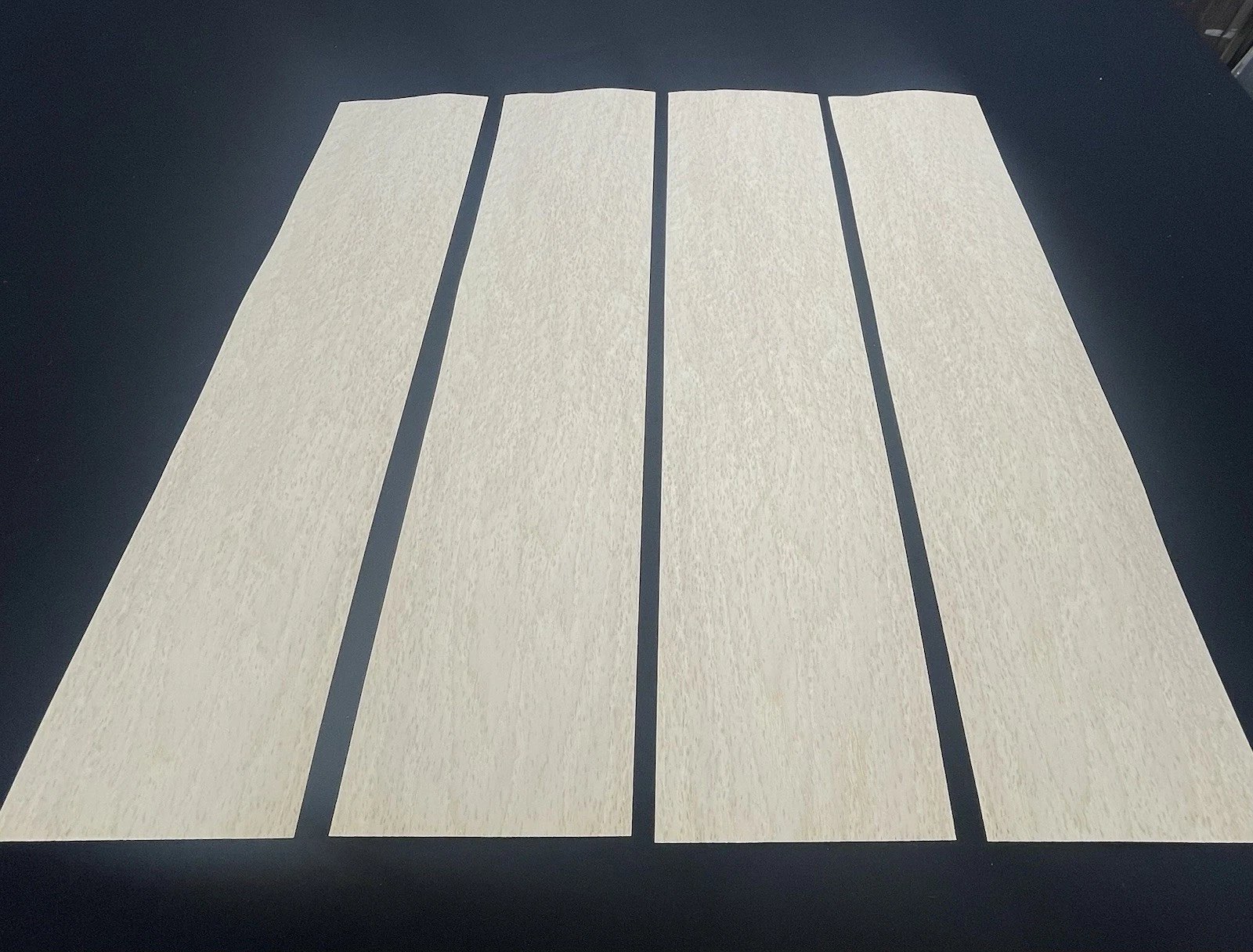
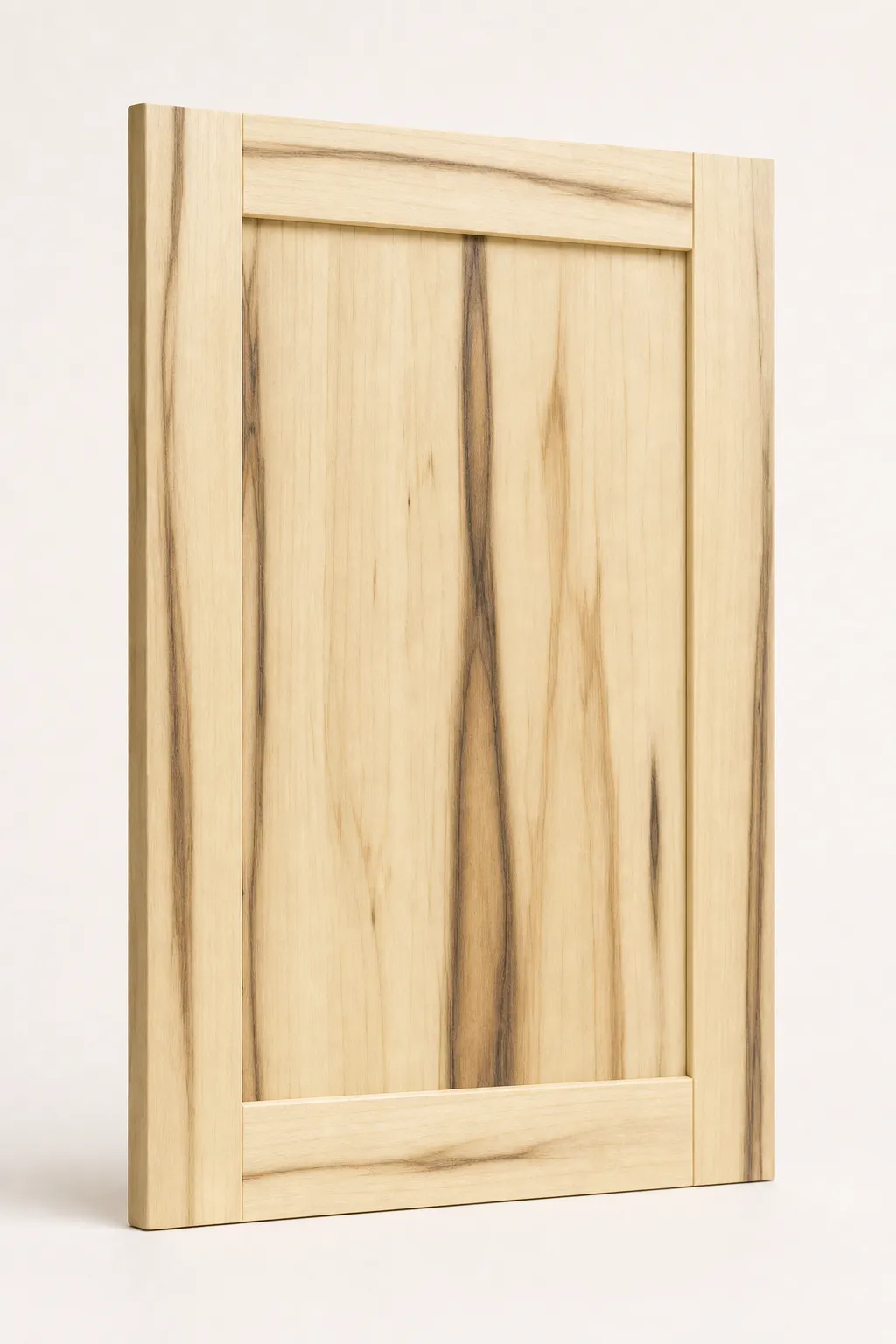
Hickory brings a rustic, high contrast look that few domestic species can match. Cream colored sapwood sits right next to medium brown heartwood on the same board, so a single sheet can carry real color variation and character. If you want hickory veneer sheets with that lodge and farmhouse feel, this is genuine wood veneer worth having on hand.
We cut and sell hickory veneer by the square foot in small, maker-friendly sizes.
What is hickory veneer?
Hickory veneer is a thin slice of real wood, from the Carya family of hardwoods native to the eastern and central United States. Slicing it thin stretches one dense, slow growing tree across many sheets, so it goes much further than the same log cut into solid boards. Because it is genuine wood veneer, not a printed laminate, it sands, stains, and finishes exactly like the solid board it came from.
Quick facts
Origin: Eastern and central United States
Color: Cream to pale tan sapwood against light to medium brown heartwood, often on the same board
Grain / figure: Straight, sometimes gently wavy; strong natural color contrast
Cut: Plain sliced
Janka hardness: About 1,820 lbf, one of the hardest domestic species
Thickness: We stock 1/45 inch raw and thicker options
Backing: Raw, or paper backed veneer on request
Workability: Good, though the density means sharp tools matter more than with softer domestics
Sold: By the square foot, ready to ship
Appearance and figure
The signature of hickory is contrast. Pale cream sapwood and warmer brown heartwood often appear on the same sheet, sometimes within inches of each other, giving a lively, rustic look that reads as authentic rather than uniform. Grain runs mostly straight with an occasional gentle wave. It is a wood that photographs well precisely because it refuses to look flat or uniform.
[Buy hickory veneer on eBay →]
Working and finishing tips
Hickory is one of the hardest woods we stock, so a genuinely sharp blade matters more here than with walnut or maple. Once cut, it presses and glues normally with standard wood glue or contact cement. Sand to about 220 grit for a smooth surface that takes a clear finish beautifully, letting the sapwood and heartwood contrast read clearly.
Honest cautions.
- Hardness dulls tools faster. Keep your blade sharp and take light passes, especially through grain reversals, or you risk tearing rather than cutting cleanly.
- Color variation is a feature, not a defect. If you want a uniform look, hickory is not the right species. Its whole appeal is the contrast.
- Can be brittle at thin sections. Handle sheets carefully at the edges, hickory is stiff and can crack if flexed sharply.
Best uses
- Rustic and lodge style furniture. The contrast grain is a natural fit for cabin and farmhouse interiors.
- Statement panels and cabinetry. A striking alternative to more uniform domestics like maple.
- Boxes and marquetry. The natural color variation gives depth without extra dye work. See Veneer for Boxes & Marquetry.
For a paler, more uniform domestic alternative, compare our Hard Maple. Browse the full Wood Veneer Types pillar or head to the Shop.
Sustainability and sourcing
Hickory is a plentiful, well managed North American hardwood. It carries no CITES listing and is rated Least Concern by the IUCN. Veneer makes the most of a genuinely dense, slow growing tree by stretching one log across dozens of projects instead of a handful.
Available now on eBay
Every sheet below is a live WoodCycle listing. We are US-based and ship fast, usually within one business day.
Frequently asked
Why does hickory veneer have such different colors on one sheet?
Hickory sapwood is cream to pale tan while its heartwood is a warmer brown, and both can appear on the same board. That contrast is the species' signature look, not a flaw.
Is hickory veneer hard to work with?
It is denser than most domestics, so a sharp blade and light cuts matter. Once cut, it glues and finishes like any other veneer.
What finish works best on hickory?
A clear oil or wipe on poly lets the natural cream and brown contrast show through without muddying it with stain.
Is hickory veneer durable?
Hickory has one of the highest Janka hardness ratings of any domestic species, though as a thin veneer its durability depends mainly on the substrate and finish underneath it.
Where does your hickory come from?
American hickory grown in the eastern and central United States. It is not CITES listed and is rated Least Concern, a responsible, sustainable choice.
Need another species for the project?
Browse the full species library or shop live listings on eBay.