
4,700+ sold · 100% feedback · US-based
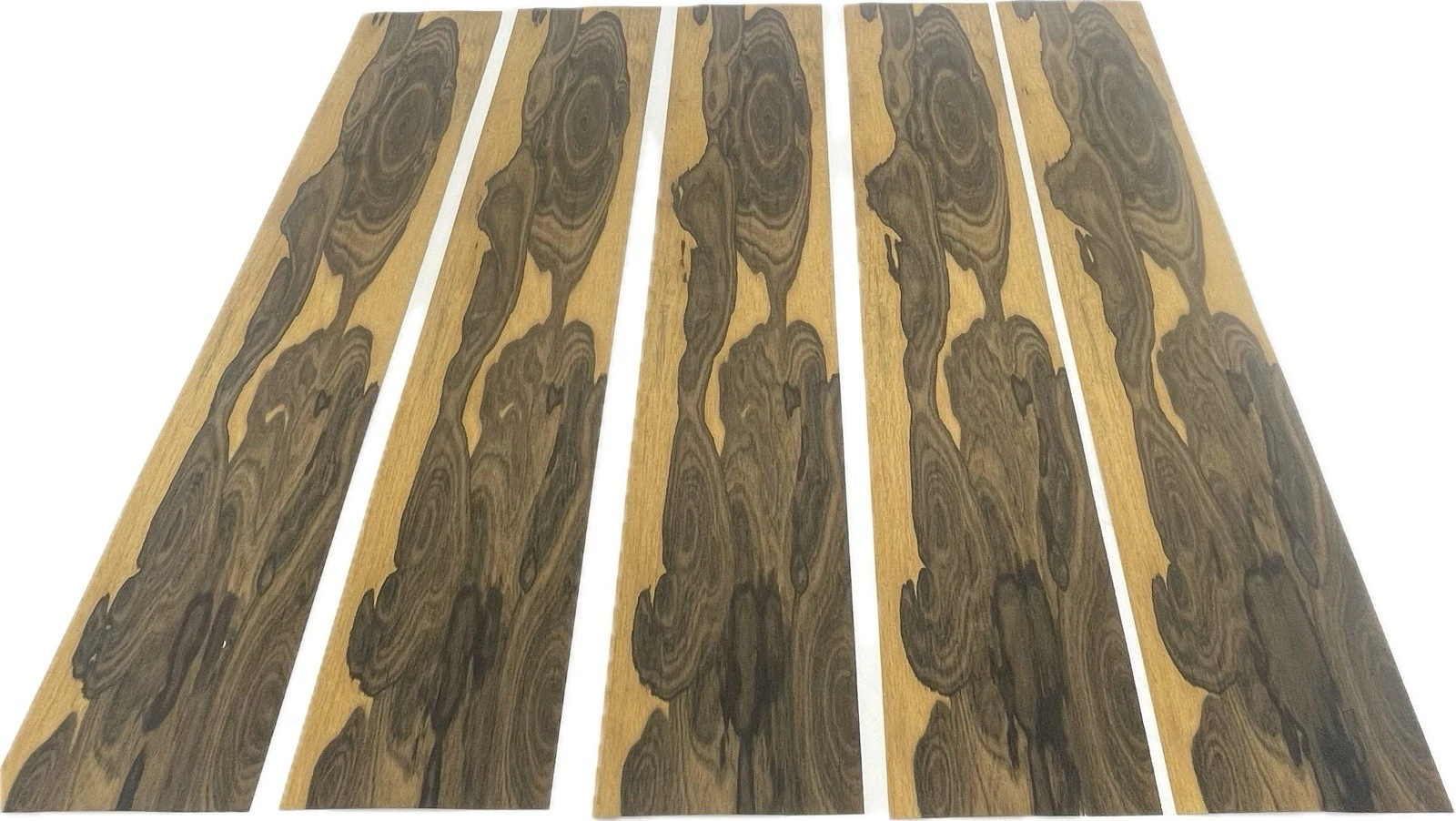
Ziricote is one of the wildest-looking woods on earth. Dark spider-web lines swirl across an olive-to-chocolate background, a pattern the trade calls "landscape" figure. No two sheets are alike, and a small piece goes a long way. If you want a showpiece wood veneer, this is it.
We cut ziricote veneer into small, maker-friendly sheets and photograph each one, so the grain patterns you see are the grain patterns you get.
What is ziricote veneer?
Ziricote veneer is a thin slice of real wood cut from Ziricote. It is used to bring the look of the species across a much larger surface than solid stock would allow, and it keeps more of each log in play for real projects. This stock traces back to Central America (Mexico, Belize, Guatemala). Botanical name Cordia dodecandra..
Quick facts
Color: Olive-brown to smoky black, with dark spider-web streaks and lighter sapwood.
Figure: Dramatic landscape and spider-webbing.
Janka hardness: ~1,970 lbf, a hard, dense wood.
Workability: Cuts and sands well, but brittle. Score slowly and back up thin areas.
Sheet sizes: small craft and sample sizes, ready to ship.
Appearance and figure
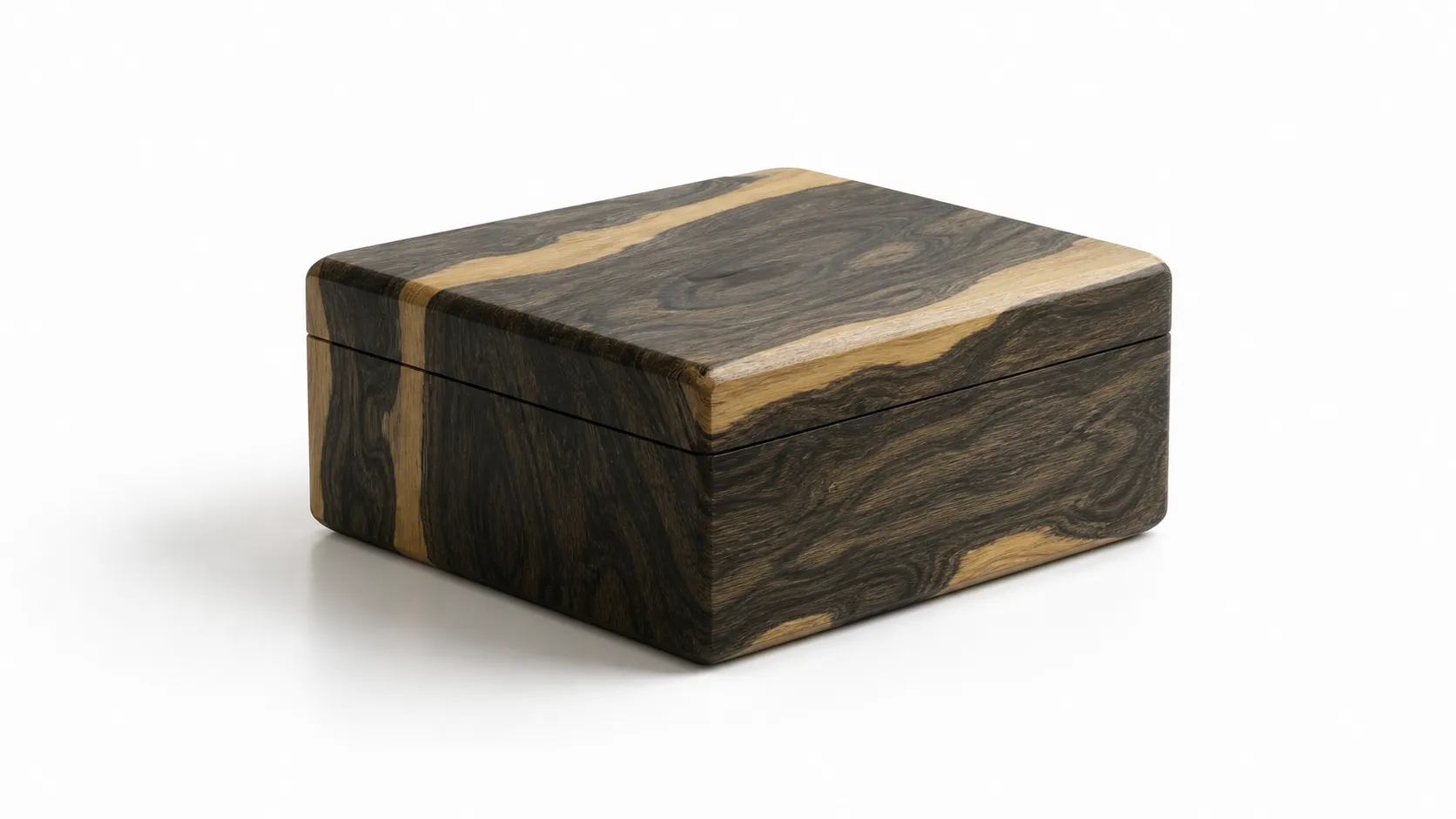
Ziricote earns its price with looks. The black webbing reads almost like ink on stone. Around the pith you often find "landscape" scenes that look like a horizon at dusk. Colors range from grey-green to deep brown, and a clear finish makes the contrast jump. Because the figure is so busy, ziricote shines as an accent: a box lid, a headstock, a knife scale, a small panel.
[See What's In Stock on eBay →]
Working and finishing tips
We'd rather you know this up front than find out with a cracked sheet on your bench.
- Hard and dense (~1,970 lbf Janka), cuts and sands to a glassy finish, but dulls a blade faster than softer species.
- Brittle. It can crack or chip if you rush it. Use sharp tools, take light passes, and back up thin areas with a little veneer softener.
- Oily. Wipe glue surfaces and any oil-based finish with acetone or naphtha first, or your adhesive may not grab. Epoxy and contact cement both hold well.
None of this is a dealbreaker, it is the price of admission for the figure. Ziricote needs no stain; its natural color and grain patterns are the whole point.
Best uses
Ziricote is a favorite of luthiers and small-scale makers. Reach for it on guitar backs and headstocks, humidor and jewelry box lids, pen blanks, knife scales, and marquetry accents. See our guides on veneer for guitars and luthiers, veneer for pens and knife scales, and veneer for boxes and marquetry.
Sustainability and sourcing
Using veneer makes each log go further by turning a small amount of real wood into much more usable surface area.
Available now on eBay
Every sheet below is a live WoodCycle listing. We are US-based and ship fast, usually within one business day.
Frequently asked
What is ziricote wood veneer used for?
Guitars, humidors, jewelry boxes, pen blanks, knife scales, and marquetry accents, anywhere a small piece of dramatic figure makes a statement.
Is ziricote hard to work with?
It is hard and a little brittle. Use a fresh blade, cut in light passes, and back up thin areas. It sands and finishes beautifully.
Why does ziricote need special glue prep?
It is an oily wood. Wipe glue surfaces with acetone or naphtha right before glue-up, or the natural oils can stop your adhesive from bonding.
Does ziricote need stain?
No. Its natural color and spider-web grain are the whole point. A clear coat or oil is all it needs.
Is ziricote endangered?
It is not CITES-listed or on the IUCN Red List, but supply is limited. We cut it thin into small sheets to make the most of every log.
Need another species for the project?
Browse the full species library or shop live listings on eBay.